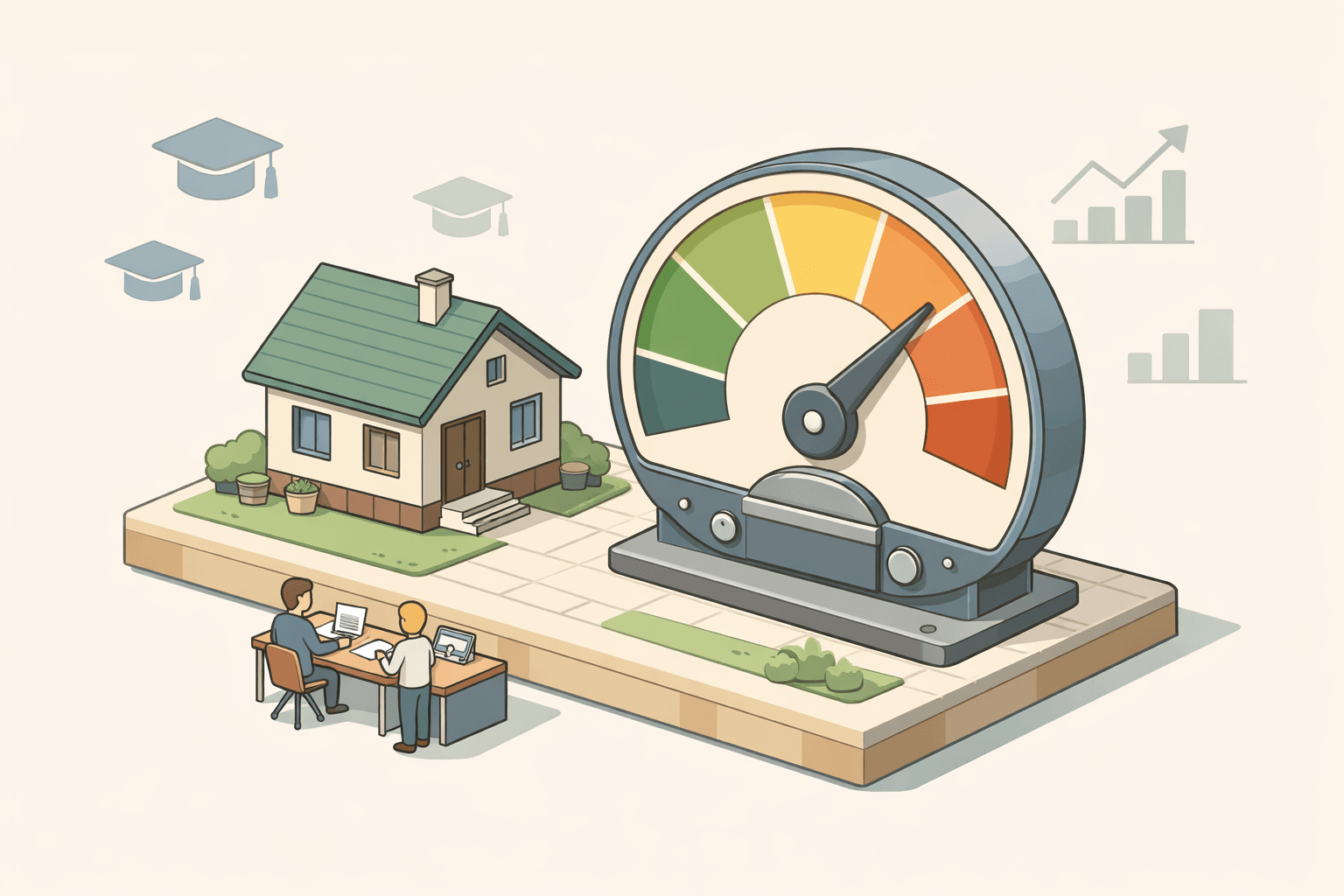
If you're shopping for a home loan, you've likely come across adjustable rate mortgages — often called ARMs. They can look very attractive at first, especially when their initial interest rates are lower than fixed-rate options. But one question tends to stop many homebuyers in their tracks: how much will mortgage rate increase with adjustable rate loans over time? It's a fair and important question. Understanding the answer could save you thousands of dollars and help you avoid financial surprises down the road. This article breaks down how ARM rates work, what drives rate changes, and what homeowners and buyers can do to stay ahead of shifting costs.
What Is an Adjustable Rate Mortgage and How Does It Work
A variable rate mortgage explained simply is a home loan where the interest rate doesn't stay fixed for the life of the loan. Instead, it starts with a fixed rate for an initial period — often three, five, seven, or ten years — and then adjusts periodically based on a financial index.
During that initial fixed period, your monthly payment stays the same, which is one reason ARMs can be appealing. After that window closes, your lender recalculates your rate using a benchmark index plus a set margin. Common indexes used include the Secured Overnight Financing Rate (SOFR), which replaced the older LIBOR benchmark, or other widely tracked financial indicators.
The structure of an ARM is often described using numbers like 5/1 or 7/1. In a 5/1 ARM, the rate is fixed for the first five years and then adjusts once every year after that. In a 7/1 ARM, you get seven years of stability before annual adjustments begin. Some products adjust every six months, though annual adjustments are more common in the U.S. market.
This setup means your payment could go up — or occasionally down — depending on where interest rates move in the broader economy. That uncertainty is exactly why so many borrowers want to understand how much their rate could realistically change before they sign on the dotted line.
How Often Do ARM Rates Change After the Fixed Period Ends
One of the most common questions borrowers ask is: how often do ARM rates change once the introductory period is over? The answer depends on the specific loan product and what's outlined in your mortgage agreement.
For most standard ARMs in the U.S., adjustments happen once per year after the fixed period ends. However, some products adjust every six months, and others may adjust less frequently. Your loan documents will clearly state the adjustment frequency, so it's critical to read them carefully before closing.
Each time your rate adjusts, the lender looks at the current value of the index your loan is tied to, then adds a margin — typically a set number of percentage points that doesn't change over the life of the loan. For example, if your index is at 4.5% and your margin is 2.5%, your new rate would be 7%. That new rate then determines your monthly payment for the next adjustment period.
It's worth noting that not every adjustment period results in a higher rate. If the index has dropped since your last adjustment, your rate could actually decrease. Still, most financial experts suggest planning for rate increases rather than decreases, especially in environments where rates are trending upward.
How Much Will Mortgage Rate Increase With Adjustable Rate Caps in Place
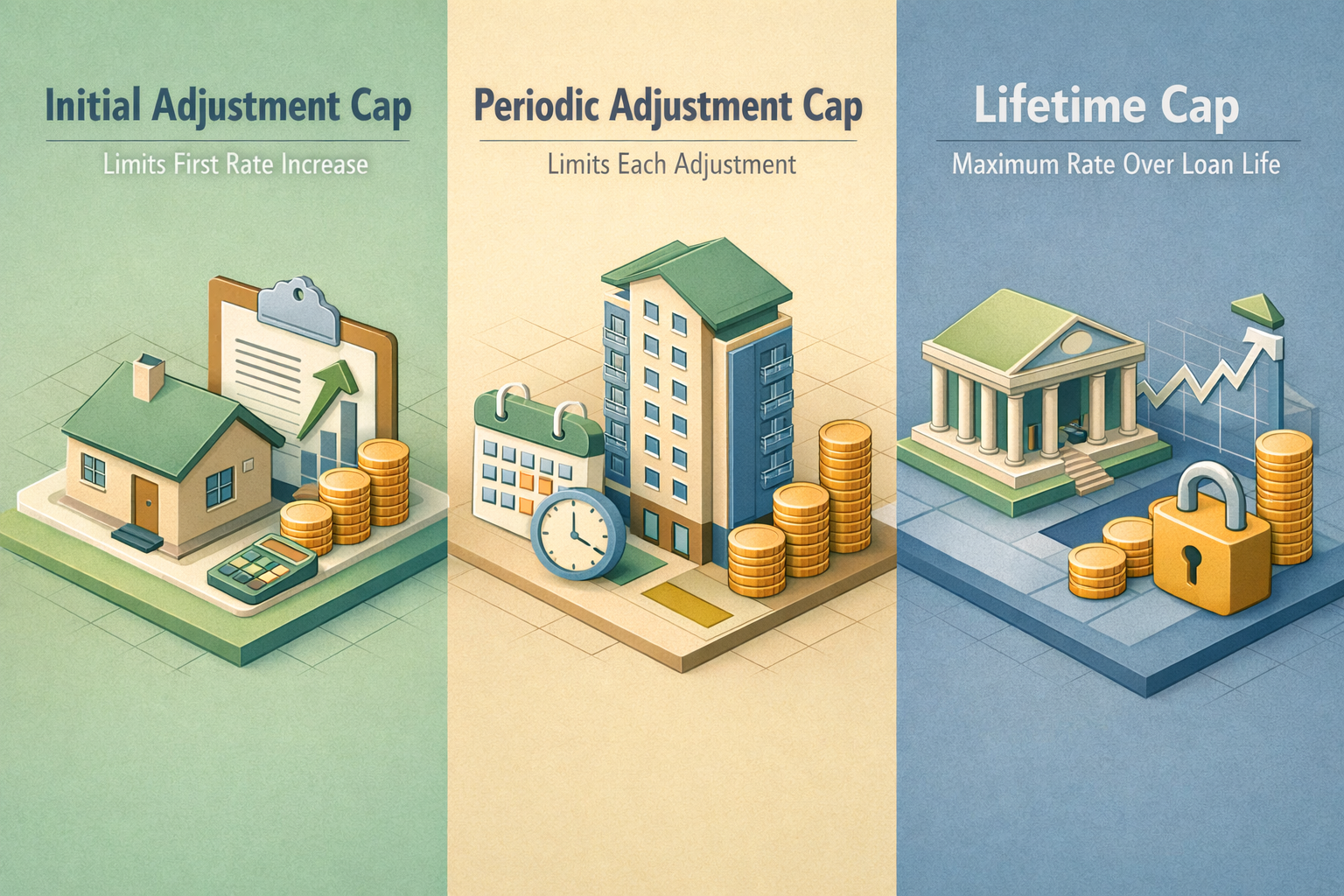
Here's some reassuring news: lenders are required to include rate caps on most ARM products. These caps limit how much will mortgage rate increase with adjustable rate loans at any single adjustment and over the life of the loan. Understanding how caps work is one of the most important parts of understanding ARM mortgage rates.
There are typically three types of caps you'll encounter:
- Initial adjustment cap: This limits how much the rate can rise the very first time it adjusts after the fixed period ends. A common cap is 2%, meaning if your starting rate was 5%, it can't jump above 7% on that first adjustment.
- Periodic adjustment cap: This limits how much the rate can change at each subsequent adjustment. A 2% periodic cap is common, meaning your rate can't increase or decrease by more than 2 percentage points per adjustment cycle.
- Lifetime cap: This sets the absolute maximum your rate can ever reach above the initial rate. A 5% lifetime cap on a loan that started at 5% means your rate can never exceed 10%, no matter how high the index climbs.
A standard cap structure in the industry is often written as 2/2/5 — meaning 2% initial cap, 2% periodic cap, and 5% lifetime cap. These protections are meaningful, but they also illustrate that your payment could still increase substantially over time. On a large loan balance, even a 2% mortgage rate increase could add hundreds of dollars to your monthly payment.
Borrowers should always ask their lender to walk through worst-case scenarios using the lifetime cap. That way, you'll know exactly what you could be facing if rates rise to the maximum allowed level.
Key Factors That Drive Adjustable Rate Mortgage Risks for Homeowners
Understanding adjustable rate mortgage risks goes beyond just knowing the cap structure. Several external and personal factors can influence how your ARM performs over time.
Benchmark Index Movements
Because your rate is tied to a financial index, broader economic conditions play a major role in how your mortgage adjusts. When the Federal Reserve raises short-term interest rates to combat inflation, many ARM indexes tend to rise as well. This can mean higher mortgage payments even if your personal financial situation hasn't changed at all.
Your Loan's Margin
The margin your lender charges is fixed for the life of the loan and added on top of the index. A lower margin is better for you as a borrower. When comparing ARM products from different lenders, the margin is a key figure to compare — not just the starting teaser rate.
How Long You Plan to Stay in the Home
One of the biggest risk factors is simply time. If you plan to sell or refinance before the fixed period ends, an ARM might work out very well for you. But if you end up staying longer than expected — which happens often — you could face multiple rate adjustments and a significantly higher payment than you originally budgeted for.
Your Financial Cushion
ARMs carry more payment uncertainty than fixed-rate loans. If your budget is tight, a payment increase of even a few hundred dollars per month could create real hardship. Borrowers who choose ARMs should ideally have enough financial flexibility to absorb higher payments if rates climb.
How ARM Rate Adjustments Compare to Fixed Rate Mortgage Stability
It's helpful to place ARM rate behavior in context by comparing it to the alternative: a fixed-rate mortgage. With a fixed-rate loan, your interest rate and monthly principal-and-interest payment never change, regardless of what happens in the economy. That predictability is a powerful financial planning tool, especially for buyers who intend to stay in their homes for many years.
ARMs, on the other hand, offer a trade-off: lower initial rates in exchange for future uncertainty. This trade-off can make a lot of sense in certain situations. For example, a homebuyer who is confident they'll relocate within five years might find a 5/1 ARM very cost-effective, since they'd likely never experience a single rate adjustment.
Similarly, some real estate investors use ARMs strategically on rental properties they plan to sell or refinance within a short window. The lower initial rate can improve cash flow during the holding period, even if long-term rate stability isn't guaranteed.
That said, fixed-rate mortgages tend to be the more popular choice for long-term homeowners, particularly when rates are at historically reasonable levels. The peace of mind that comes with knowing your payment will never rise is something many borrowers value highly — and rightly so.
Smart Strategies to Manage and Reduce ARM Rate Change Exposure
If you already have an ARM or are seriously considering one, there are several strategies that may help you manage the impact of future rate changes.
Refinance Before the Fixed Period Ends
Many ARM borrowers plan from the start to refinance into a fixed-rate mortgage before their loan begins adjusting. This strategy can work well if interest rates remain favorable and your financial profile — credit score, income, and equity — supports a refinance. The key is to start the refinancing process well before the adjustment date, not after your rate has already climbed.
Make Extra Payments During the Fixed Period
Paying down your principal balance faster during the low-rate introductory period could reduce your overall loan balance. A smaller balance means that when rates do adjust upward, the dollar impact on your payment may be somewhat lower.
Build an Emergency Fund for Payment Increases
Even with caps in place, your monthly payment could rise meaningfully. Setting aside reserves specifically to cover potential payment increases gives you a financial buffer and prevents you from feeling caught off guard.
Monitor Your Index Regularly
Once your ARM enters its adjustment phase, keep an eye on the index your loan is tied to. Many financial websites track SOFR and other common indexes. Being informed ahead of each adjustment date allows you to plan your budget accordingly and explore refinancing options if rates are trending sharply higher.
●Conclusion
The question of how much will mortgage rate increase with adjustable rate loans doesn't have a single answer — it depends on your loan's cap structure, the benchmark index it's tied to, and how long you hold the loan. What is clear is that ARMs are not unpredictable products without limits. They come with defined caps, structured adjustment schedules, and specific terms that borrowers can evaluate before committing. The key is to go in with eyes wide open: understand your caps, stress-test your budget against worst-case scenarios, and have a clear exit strategy if rates begin to rise. Whether you're a first-time homebuyer, a seasoned real estate investor, or a homeowner evaluating a refinance, working with an experienced mortgage professional can help you compare ARM and fixed-rate options side by side. At LoanWise, our team is here to help you navigate the details, so you can choose the loan that fits your financial goals with confidence.