
Essential DTI Strategies for Investors
The Mortgage Debt-to-Income Ratio (DTI) plays a crucial role in determining your eligibility for investment property financing. While traditional mortgage lenders typically focus heavily on personal DTI calculations, the landscape for real estate investors has evolved significantly. Understanding how DTI impacts your financing options, especially with products like DSCR loans, can make the difference between securing favorable terms and missing out on profitable deals. This comprehensive guide explores essential strategies that savvy investors use to navigate DTI requirements and optimize their financing approach.
Essential DTI Calculation Checklist
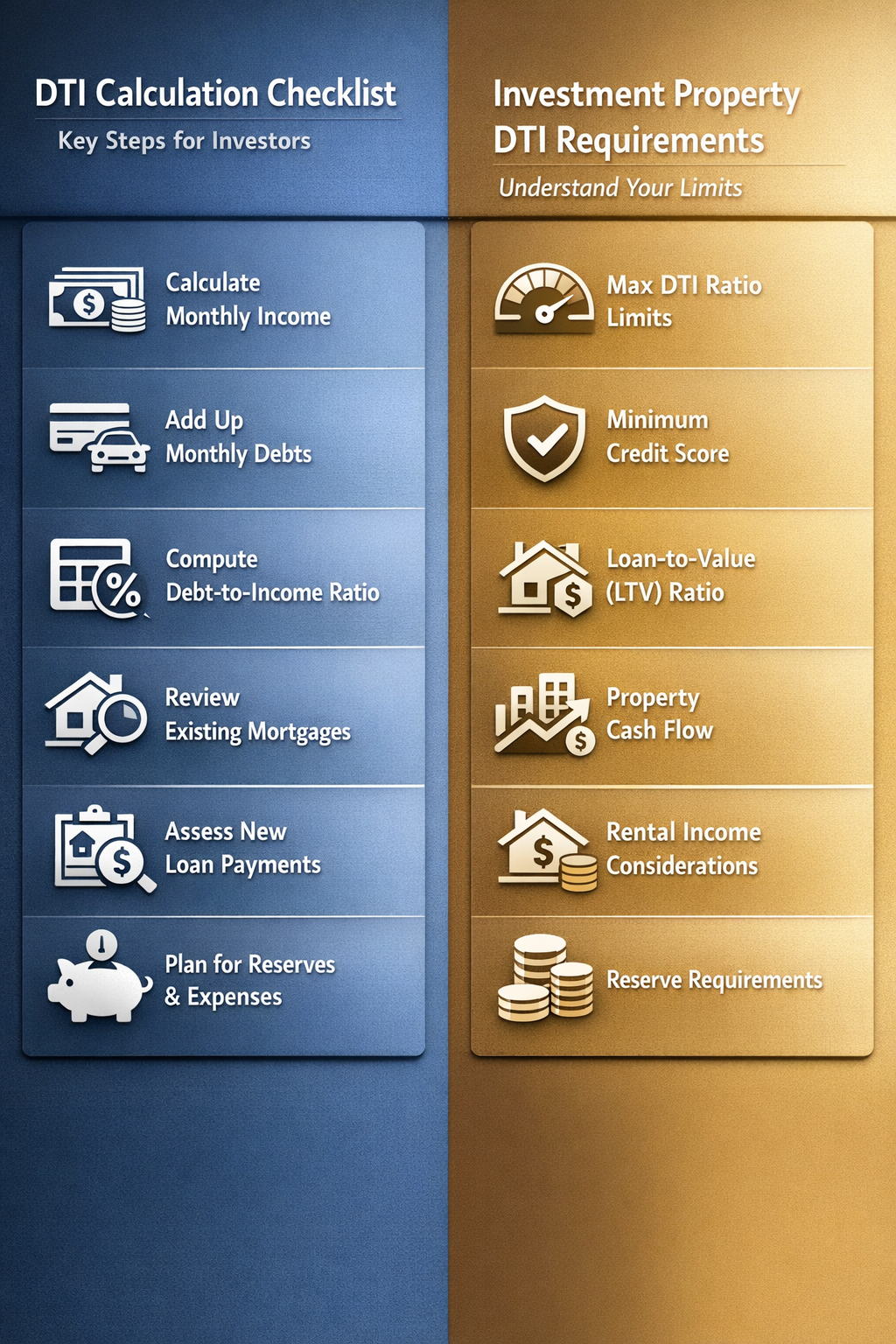
Calculating DTI for a mortgage requires precision and attention to detail, particularly when dealing with investment properties. Getting these DTI calculations right from the start can streamline your loan approval process.
- Include all monthly debt obligations: Credit cards, auto loans, student loans, existing mortgages, and any other recurring monthly payments that appear on your credit report
- Use gross monthly income figures: Include salary, bonuses, rental income from existing properties, and other verifiable income sources before taxes and deductions
- Account for proposed mortgage payment: Include principal, interest, taxes, insurance, and HOA fees for the new investment property you're financing
- Apply the 75% rule for rental income: Most lenders count only 75% of projected rental income to account for vacancy and maintenance costs
Investment Property DTI Requirements
Investment property DTI requirements often differ from primary residence financing, and understanding these nuances can help you prepare more effectively for the application process.
- Traditional lenders typically cap DTI at 43-45%: This includes your new investment property payment along with all existing debts and obligations
- Portfolio lenders may allow higher ratios: Some specialized lenders accept DTI ratios up to 50% for experienced investors with strong cash reserves
- DSCR loans focus on property performance: These loans emphasize the property's debt service coverage ratio rather than your personal DTI, offering more flexibility for investors
- Credit score requirements remain important: Even with flexible DTI options, maintaining credit scores around 680 or higher typically provides access to better terms and rates
Improving Your DTI Before Applying
Improving your DTI before applying for investment property financing can significantly enhance your loan options and terms. Strategic preparation often makes the difference in securing competitive rates.
- Pay down high-interest debt first: Focus on credit cards and other revolving debt that impacts both your DTI and credit utilization ratios
- Increase your documented income: Consider timing bonus payments, rental increases, or side income to boost your qualifying income figures
- Avoid taking on new debt: Refrain from financing vehicles, furniture, or other major purchases during the months leading up to your mortgage application
- Consider debt consolidation strategically: Combining multiple payments into a single lower payment can improve your DTI, but ensure the new terms are favorable
Step-by-Step DTI Optimization Process
Following a systematic approach to DTI optimization helps ensure you're positioning yourself for the best possible financing terms on your investment properties.
- Calculate your current DTI accurately: List all monthly debt obligations and divide by gross monthly income to establish your baseline ratio
- Identify the quickest wins: Look for debts you can pay off completely within 30-60 days to immediately improve your ratio
- Project rental income conservatively: Use market rent data and apply the 75% rule to estimate how much rental income lenders will count toward your qualifying income
- Time your application strategically: Apply after implementing improvements but before taking on any new debt that could impact your ratios
Maximum DTI Thresholds by Loan Type
Different loan products have varying maximum DTI for mortgage approval, and understanding these limits helps you choose the right financing strategy for your investment goals.
- Conventional investment loans typically allow 43-45% DTI: These loans require strong credit scores and significant cash reserves but offer competitive rates for qualified borrowers
- Portfolio lenders may extend to 50% DTI: Local banks and credit unions sometimes offer more flexibility, especially for established customers with strong banking relationships
- DSCR loans minimize personal DTI impact: These loans focus primarily on the property's ability to cover its debt service, often allowing investors to qualify regardless of personal DTI ratios
- Bridge loans offer short-term flexibility: These temporary financing solutions often have more relaxed DTI requirements but come with higher rates and shorter terms
DSCR Loan Alternatives to Traditional DTI
DSCR loans represent a significant shift away from traditional DTI-focused underwriting, offering real estate investors more flexibility in their financing approach.
- Property cash flow becomes the primary qualifier: Lenders evaluate the property's rental income against its proposed mortgage payment rather than your personal debt obligations
- Minimum DSCR ratios typically start at 1.0: This means the property's rental income should at least equal the mortgage payment, though many lenders prefer ratios of 1.2 or higher
- Credit scores remain important but less restrictive: While DSCR lenders often require scores around 680, the emphasis shifts toward the property's investment potential rather than employment verification
- Current rates range from 6.00% to 7.50%: Recent market conditions have made DSCR financing more competitive, providing investors with affordable options for portfolio expansion
Strategic DTI Planning for Portfolio Growth
Strategic DTI planning becomes increasingly important as you scale your real estate investment portfolio. Smart investors understand that managing DTI ratios isn't just about qualifying for individual loans, but positioning themselves for long-term growth and financial flexibility. The key lies in balancing traditional financing options with alternative products like DSCR loans, which can help preserve your personal DTI capacity for other opportunities. By maintaining strong credit profiles, optimizing income documentation, and choosing the right loan products for each situation, investors can continue expanding their portfolios even as their personal debt obligations grow. This strategic approach ensures that DTI requirements become a manageable aspect of your investment strategy rather than a limiting factor.
●Conclusion
Mastering the Mortgage Debt-to-Income Ratio (DTI) landscape is essential for successful real estate investing in today's market. While traditional DTI requirements can present challenges, understanding your options and implementing strategic improvements can significantly expand your financing possibilities. The emergence of DSCR loans and other investor-focused products has created new pathways for portfolio growth that don't rely solely on personal DTI calculations. Whether you're working to improve your current ratios or exploring alternative financing structures, the key is to approach DTI as one component of a comprehensive investment strategy. By staying informed about evolving loan products and maintaining strong financial fundamentals, you can position yourself to take advantage of profitable opportunities while building a sustainable and scalable real estate portfolio.