Essential Equipment Financing for Real Estate Investors
Real estate investors often need substantial capital not just for property acquisitions, but also for the equipment and tools that make their investments profitable. Whether you're renovating a fix-and-flip project or upgrading rental properties, understanding how business loan for equipment financing works alongside traditional investment loans can significantly impact your bottom line. With DSCR loan rates currently ranging from 5.875% to 7.375% for qualified borrowers in 2026, investors have more opportunities than ever to leverage multiple financing strategies for their equipment needs and property investments.
Smart Financing Strategies: What You Should Do
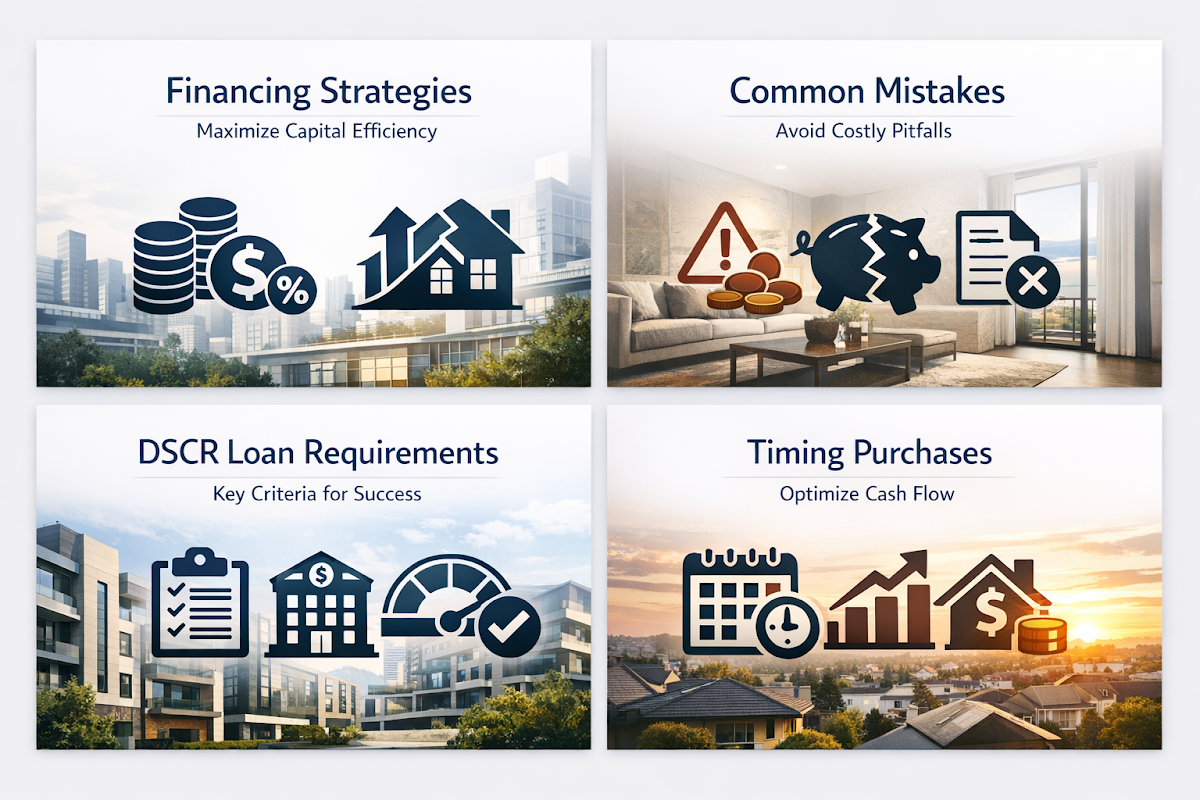
Smart financing strategies can make the difference between a profitable investment and a costly mistake. These proven approaches help real estate investors maximize their capital efficiency while securing the equipment they need for successful projects.
- Leverage DSCR loans for property purchases: With current rates as low as 5.875%, these loans require no tax returns and focus on property cash flow rather than personal income, making them ideal for investors building portfolios.
- Consider equipment financing separately: Equipment loans often offer better terms for tools and machinery compared to rolling everything into a property loan, potentially saving thousands in interest over time.
- Maintain adequate cash reserves: DSCR lenders typically require 2-6 months of mortgage payments in reserves, which also serves as a safety net for equipment purchases and unexpected repairs.
- Time your applications strategically: Apply for equipment financing before taking on additional property debt to maintain optimal debt-to-income ratios and preserve borrowing capacity.
Common Financing Mistakes: What You Should Avoid
Common financing mistakes can derail even the most promising real estate investment projects. Avoiding these pitfalls helps investors maintain their financial flexibility and maximize their returns on both equipment and property investments.
- Don't ignore seasoning requirements: DSCR loan seasoning rules may affect your ability to refinance quickly, so plan equipment purchases around these timelines to avoid cash flow constraints.
- Don't overlook total cost of ownership: Focusing only on monthly payments without considering maintenance, insurance, and depreciation can lead to budget shortfalls that impact your investment strategy.
- Don't mix personal and business credit: Keep equipment financing separate from personal mortgages to maintain clean credit profiles and preserve future borrowing opportunities for additional properties.
- Don't rush into long-term commitments: Equipment needs may change as your portfolio grows, so avoid locking into inflexible terms that could limit your future investment options.
Key DSCR Loan Requirements for Equipment-Heavy Projects
Key DSCR loan requirements for equipment-heavy projects require careful planning and preparation. Understanding these criteria helps investors structure their financing to accommodate both property acquisition and the equipment needed for successful project completion.
- Maintain minimum credit scores: Most lenders require credit scores of 620-680 for DSCR loans, though higher scores may qualify for the lowest rates of 5.875% currently available in 2026.
- Prepare substantial down payments: DSCR loans typically require 20-25% down for investment properties, leaving capital available for equipment purchases or requiring separate equipment financing arrangements.
- Document property cash flow potential: Lenders focus on debt service coverage ratios, typically requiring 1.0 to 1.25 times coverage, which must account for any equipment loan payments that affect overall property profitability.
- Plan for verification processes: While DSCR loans don't require tax returns, lenders may verify other financial documents, and equipment financing applications will require additional documentation of business operations and equipment specifications.
Timing Equipment Purchases with Property Acquisitions
Timing equipment purchases with property acquisitions requires strategic coordination to optimize financing terms and maintain adequate cash flow. Smart timing can help investors secure better rates and preserve borrowing capacity for future deals.
- Secure property financing first: Complete your DSCR loan application before applying for equipment financing, as property loans typically offer more favorable terms and should take priority in your capital stack.
- Coordinate closing timelines: Plan equipment deliveries to align with property closing dates, ensuring you have immediate access to tools needed for renovations without paying unnecessary carrying costs.
- Consider bridge financing for gaps: If equipment is needed before property financing closes, short-term bridge loans can provide interim funding while preserving your primary financing strategy.
- Plan for seasonal variations: Equipment prices and availability may fluctuate seasonally, while property markets may offer better opportunities at certain times, requiring flexible timing strategies to optimize both purchases.
Evaluating Equipment Loan vs Lease Options for Real Estate Projects
Evaluating equipment loan vs lease options for real estate projects involves analyzing multiple factors that affect both immediate cash flow and long-term investment returns. The right choice depends on your investment timeline, tax situation, and equipment usage patterns.
- Calculate total cost over equipment lifespan: Equipment loans typically cost less over time due to ownership benefits and tax deductions, while leases may offer lower upfront costs but higher total expenses for long-term use.
- Consider tax implications for each option: Loan interest and depreciation may provide better tax benefits for investors holding equipment long-term, while lease payments offer immediate deductions but no ownership advantages.
- Assess flexibility needs for growing portfolios: Leasing might offer more flexibility for investors rapidly scaling their operations, while purchasing provides stability for established investors with predictable equipment needs.
- Factor in maintenance and obsolescence risks: Leased equipment often includes maintenance packages and upgrade options, while owned equipment requires separate maintenance budgeting but allows for longer use beyond typical lease terms.
●Conclusion
Successfully financing equipment for real estate investments requires a strategic approach that considers both immediate project needs and long-term portfolio goals. With DSCR loan rates currently at attractive levels and streamlined qualification processes, investors have significant opportunities to structure financing that supports both property acquisitions and equipment needs. The key lies in understanding the interplay between different financing options, timing applications strategically, and maintaining the financial flexibility needed for continued growth. As you evaluate your next investment opportunity, consider how equipment financing can enhance your project's profitability while preserving capital for future deals. Smart financing decisions today can provide the foundation for sustained success in your real estate investment journey.