
Equipment Financing Guide for Investors
Real estate investors often need specialized equipment to maximize their property investments. Whether you're running a fix and flip operation or managing multiple rental properties, securing a business loan for equipment can help you acquire the tools and machinery necessary for success. Equipment financing provides investors with flexible options to purchase or lease everything from construction equipment to property management software without depleting cash reserves.
Understanding your financing options becomes crucial when evaluating equipment purchases against your investment goals. The right equipment financing strategy can improve your cash flow while ensuring you have access to the tools needed to maintain competitive advantages in today's market.
Essential Equipment Financing Options for Property Investors
Essential equipment financing options for property investors provide multiple pathways to acquire necessary tools and machinery. Real estate investors can choose from several financing structures depending on their cash flow needs and long-term investment strategies.
- Traditional equipment loans offer fixed monthly payments and eventual ownership, making them ideal for investors who plan to use equipment long-term across multiple properties
- Equipment leasing arrangements provide lower monthly payments with options to upgrade or return equipment, which works well for investors testing new markets or managing seasonal demand
- SBA equipment financing delivers competitive rates and longer repayment terms for qualifying small business investors, though the application process may require more documentation
- Bridge loan equipment purchases allow investors to acquire equipment quickly using existing property equity, providing immediate access to tools needed for time-sensitive projects
Comparing Leasing vs Buying Equipment for Real Estate Investments
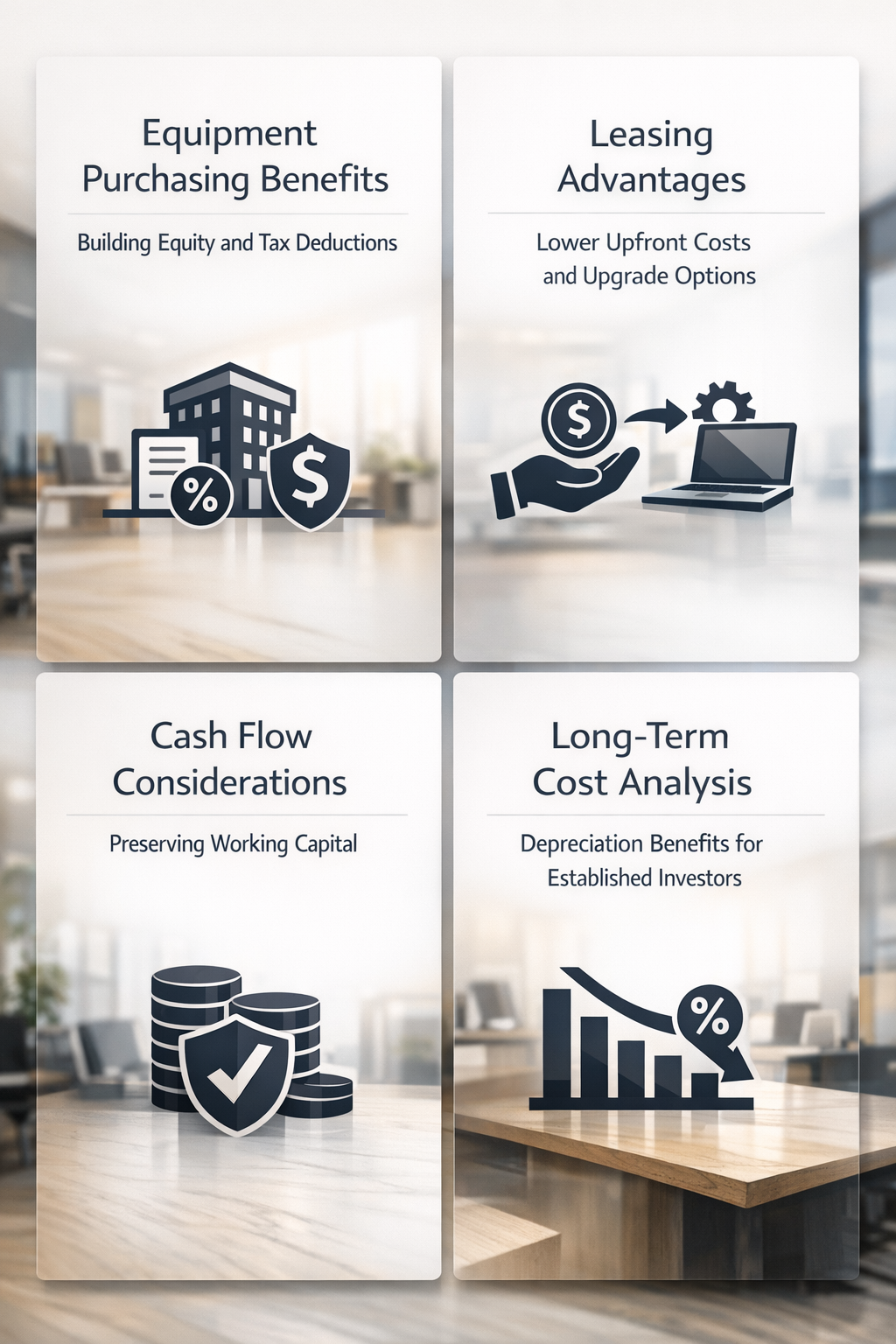
Comparing leasing vs buying equipment for real estate investments requires careful analysis of your investment timeline and cash flow projections. Each approach offers distinct advantages depending on your property portfolio size and operational needs.
- Equipment purchasing benefits include building equity in assets, potential tax deductions through depreciation, and no mileage or usage restrictions that might limit intensive project work
- Leasing advantages typically involve lower upfront costs, predictable monthly expenses, and the ability to upgrade to newer models without selling existing equipment
- Cash flow considerations often favor leasing for newer investors who need to preserve working capital for property acquisitions and unexpected repairs
- Long-term cost analysis may show purchasing advantages for established investors who use equipment consistently across multiple projects and can benefit from depreciation deductions
Understanding Equipment Loan Interest Rates and Terms
Understanding equipment loan interest rates and terms helps investors make informed financing decisions that align with their investment strategies. Interest rates and loan structures can vary significantly based on equipment type, loan amount, and borrower qualifications.
- Rate factors include credit scores, business cash flow, down payment amounts, and the type of equipment being financed, with newer equipment typically qualifying for better rates
- Term lengths often range from two to seven years depending on equipment lifespan and loan amount, with longer terms reducing monthly payments but increasing total interest costs
- Fixed vs variable rates offer different risk profiles, with fixed rates providing payment predictability while variable rates might start lower but carry interest rate risk
- Collateral requirements usually involve the equipment itself securing the loan, though some lenders may require additional business assets or personal guarantees from borrowers
Equipment Types That Qualify for Business Loan Financing
Equipment types that qualify for business loans financing cover a broad range of tools and machinery used in real estate investment operations. Lenders typically finance equipment that maintains or increases in value while supporting business operations.
- Construction and renovation equipment includes excavators, bobcats, power tools, and specialized contractors' equipment used in fix and flip projects and property improvements
- Property maintenance tools covers lawn care equipment, pressure washers, generators, and HVAC systems needed for ongoing rental property management
- Technology and software encompasses property management platforms, security systems, and computer equipment that streamline investment operations
- Vehicles and transportation includes work trucks, trailers, and commercial vehicles used primarily for business purposes in property investment activities
Step-by-Step Process for Applying for an Equipment Loan
The step-by-step process for applying for an equipment loan requires careful preparation and documentation to secure favorable terms. Following a systematic approach can streamline the application process and improve approval chances.
- Gather financial documentation including tax returns, bank statements, profit and loss statements, and existing debt schedules to demonstrate your business's financial stability and ability to service debt
- Research equipment specifications and pricing from multiple vendors to provide lenders with detailed information about the equipment's cost, condition, and expected useful life
- Compare lender options and rates from banks, credit unions, and specialized equipment financing companies to find the most competitive terms for your situation
- Submit application with required documents and be prepared to provide additional information about your business operations, equipment usage plans, and collateral details during the underwriting process
- Review loan terms and complete closing by carefully examining interest rates, payment schedules, insurance requirements, and any restrictions before signing the final loan documents
Tax Benefits and Depreciation Strategies for Equipment Purchases
Tax benefits and depreciation strategies for equipment purchases can significantly impact the true cost of equipment financing for real estate investors. Understanding available tax advantages helps investors make more informed financing decisions.
- Section 179 deductions may allow investors to deduct the full purchase price of qualifying equipment in the year it's placed in service, rather than depreciating it over several years
- Bonus depreciation rules might permit additional first-year deductions on certain equipment purchases, potentially providing substantial tax savings for profitable investment businesses
- Interest deduction benefits allow investors to deduct loan interest payments as business expenses, reducing the effective cost of financing equipment purchases
- Lease payment deductions typically allow the full monthly lease payment to be deducted as a business expense, which may provide different tax advantages compared to purchasing
●Conclusion
Securing the right business loan for equipment can significantly enhance your real estate investment operations while preserving valuable cash flow. Whether you choose traditional financing, leasing arrangements, or specialized programs, the key lies in matching your equipment needs with financing terms that support your investment strategy.
Consider your long-term investment goals, cash flow requirements, and tax situation when evaluating equipment financing options. The right approach can provide you with essential tools while maintaining the financial flexibility needed to capitalize on new investment opportunities as they arise.