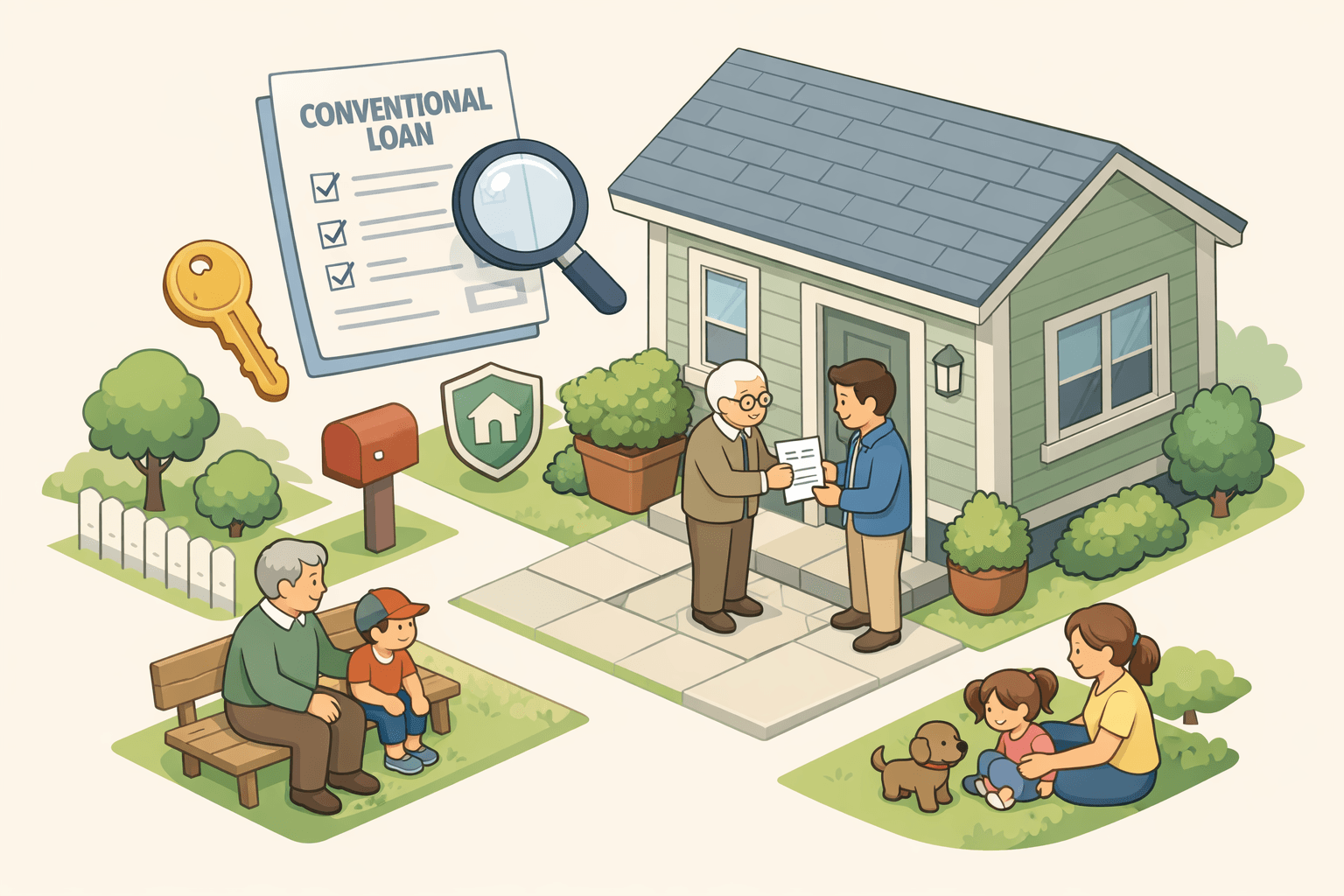
Buying a home with financial help from a grandparent is more common than many people realize. Grandparents often want to support younger family members in achieving homeownership, and gifting funds for a down payment is one meaningful way to do that. But once that gift is in place, a key question arises: how does the cost of PMI for a conventional loan with a gifted down payment from a grandparent compare to a standard scenario? Private mortgage insurance, or PMI, is often required when a borrower puts down less than 20% on a conventional home loan. Understanding how gift funds interact with PMI requirements can help homebuyers plan their finances more confidently and avoid surprises at closing.
What Is PMI and Why Does It Apply to Conventional Loans
Private mortgage insurance is a type of protection that lenders typically require when a borrower's down payment falls below 20% of the home's purchase price. On a conventional loan, this threshold is a standard guideline set by lenders and backed by guidelines from Fannie Mae and Freddie Mac. PMI does not protect the borrower — it protects the lender in the event the borrower defaults on the loan.
The cost of PMI is generally expressed as an annual percentage of the loan amount and is usually divided into monthly installments added to your mortgage payment. Rates can vary based on several factors, including your credit score, loan-to-value (LTV) ratio, loan term, and the size of your down payment. Borrowers with higher credit scores and larger down payments may qualify for lower PMI rates, while those with thinner down payments or lower scores may pay more.
It's important to understand that PMI is not permanent. On conventional loans, borrowers may be able to request PMI cancellation once their equity reaches 20% of the home's original value, and lenders are generally required to automatically terminate it when equity reaches 22%, based on the original amortization schedule.
How a Gifted Down Payment From a Grandparent Works
When a grandparent provides funds to help with a home purchase, lenders classify this as a gift rather than a loan. This distinction matters significantly. A true gift has no expectation of repayment, and lenders will typically require documentation to confirm this. Most lenders will ask for a gift letter signed by the donor — in this case, the grandparent — stating the amount gifted, the relationship to the borrower, and a clear confirmation that no repayment is expected.
For conventional loans, gift funds are generally allowed from family members, including grandparents. However, the rules around how much of the down payment can come from gift funds may depend on the loan's loan-to-value ratio. If the borrower is putting down 20% or more, the entire amount could potentially come from gift funds. But if the down payment is less than 20%, some lenders or loan programs may require the borrower to contribute a minimum amount from their own funds — though this can vary by lender and loan type.
It's wise to work closely with your loan officer to understand the specific gift fund requirements for your loan scenario before assuming the entire down payment can be covered by a grandparent's gift.
Does Using Gift Funds Change the Cost of PMI for Conventional Loan With Gifted Down Payment From Grandparent
This is the core question many homebuyers have. The short answer is: the source of your down payment funds generally does not directly change your PMI rate on its own. What primarily drives PMI pricing is your loan-to-value ratio and your credit score, not where the down payment dollars came from.
For example, if you receive a gift from your grandparent that brings your total down payment to 10%, your LTV would be 90%. Your PMI cost would be calculated based on that 90% LTV and your credit profile — the same as it would be for any borrower with a 10% down payment. The gifted nature of the funds does not automatically raise or lower the PMI rate in most conventional loan scenarios.
That said, there may be indirect effects worth considering. If the gift allows you to make a larger down payment than you could have managed on your own, it could lower your LTV ratio, which in turn may reduce your PMI costs. Conversely, if the gift only covers a small portion of the down payment and your overall credit profile is weaker, PMI costs could still be relatively higher regardless of the gift.
- Higher down payment = lower LTV = potentially lower PMI rate
- Strong credit score = potentially lower PMI premium
- Gift source alone does not typically increase PMI costs
Typical PMI Rate Ranges and What Borrowers Might Pay
PMI rates on conventional loans can vary, but they often fall somewhere in a range that depends heavily on LTV and credit score. Borrowers with excellent credit and a relatively low LTV may see lower annual PMI rates, while those with weaker credit or higher LTVs may see higher premiums. While specific rate figures shift with market conditions and individual lender pricing, it's common for PMI to represent a meaningful addition to monthly housing costs for borrowers who don't put 20% down.
To put this in perspective, consider a homebuyer who uses a grandparent's gift to cover part of their down payment, reaching a total down payment of 10% on a $350,000 home. Their loan amount would be $315,000. If their PMI rate were, say, in the lower range for a well-qualified borrower, the annual PMI cost could translate into a noticeable monthly expense. The exact figure would depend on the lender's pricing, the borrower's credit score, and the specific loan terms.
Because PMI pricing is individualized, the best approach is to request a Loan Estimate from your lender, which will clearly show your estimated PMI costs. Comparing estimates from multiple lenders may also reveal meaningful differences in PMI pricing for the same loan scenario.
Documentation and Lender Requirements for Gift Funds
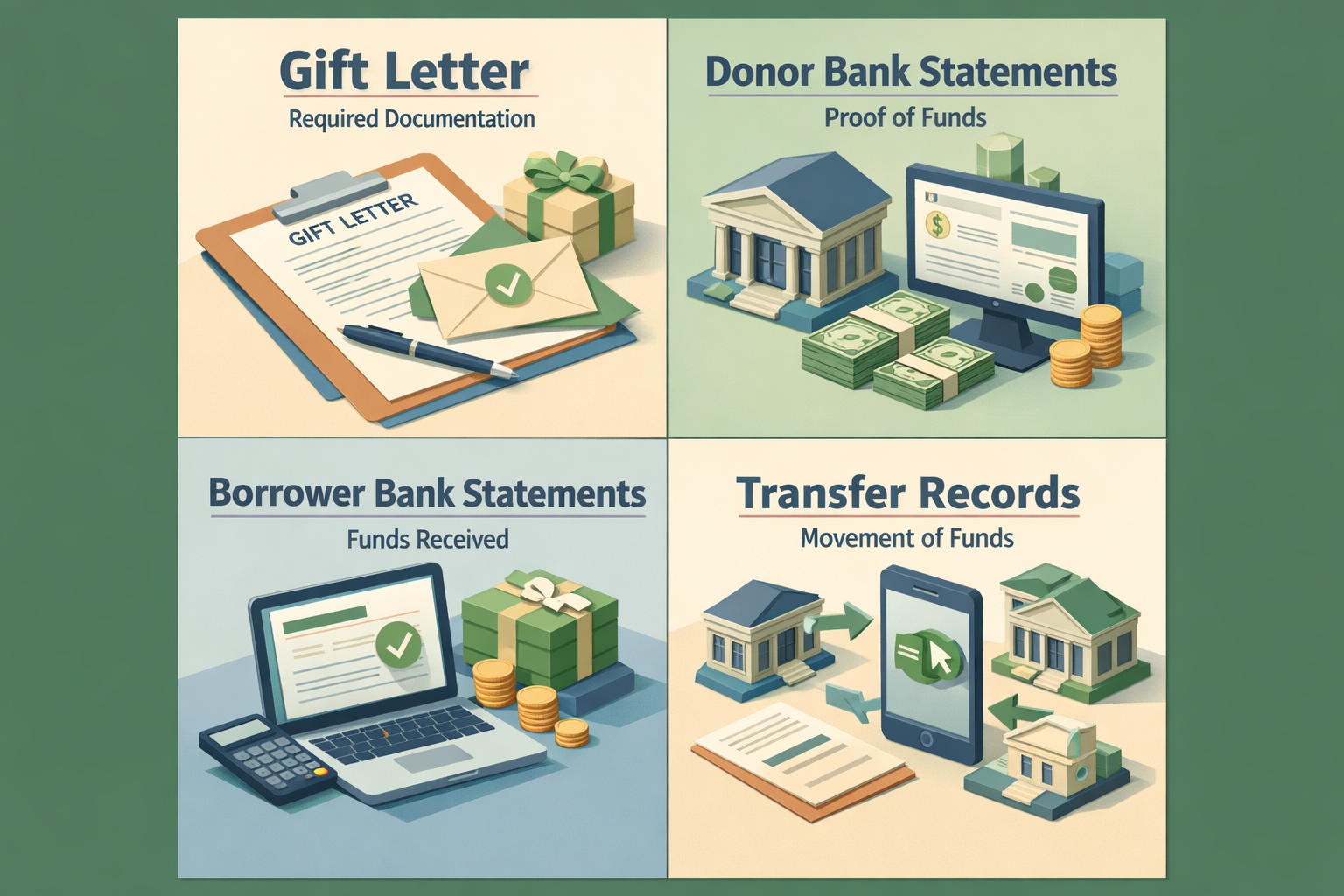
When a grandparent gifts money for a down payment, lenders will want a clear paper trail. This protects both the borrower and the lender and helps ensure the loan meets conventional guidelines. Here's what lenders typically look for when processing gifted down payment PMI conventional loan applications:
- Gift letter: A signed letter from the grandparent stating the gift amount, relationship to the borrower, property address, and confirmation that repayment is not required.
- Donor bank statements: Lenders may want to see that the grandparent actually has the funds and that the transfer is legitimate.
- Borrower bank statements: Documentation showing the funds were received into the borrower's account prior to closing.
- Transfer records: Wire confirmations or deposit records may also be requested to trace the movement of funds.
Failing to document gift funds properly is one of the more common reasons mortgage applications face delays or complications. Starting this process early — ideally as soon as you know you'll be receiving a gift — can help keep your timeline on track. Your loan officer can walk you through the exact documentation your lender requires, as requirements can vary slightly between institutions.
Strategies to Reduce PMI Costs When Using a Grandparent Gift
The good news is that there are several approaches that may help reduce or even eliminate PMI costs, even when part of your down payment comes from a grandparent's gift. Here are some strategies worth exploring with your mortgage professional:
Aim for a Larger Down Payment
If your grandparent's gift brings you close to the 20% threshold, consider whether you can supplement with your own savings to reach that mark. Putting 20% down typically eliminates the PMI requirement entirely on a conventional loan, which could save you a meaningful amount over time.
Improve Your Credit Score Before Applying
Since credit score is a key factor in PMI pricing, taking steps to strengthen your credit before applying for a mortgage may result in a lower PMI rate. Paying down credit card balances, avoiding new credit inquiries, and correcting any errors on your credit report are common steps borrowers take to improve their score.
Explore Lender-Paid PMI Options
Some lenders offer lender-paid PMI, where the lender covers the PMI cost in exchange for a slightly higher interest rate. This can be a useful trade-off in certain situations, though the long-term costs depend on how long you plan to stay in the home. Discuss this option with your lender to see if it fits your financial goals.
Request PMI Cancellation Once Equity Grows
Even if you start with PMI, it doesn't have to be a permanent expense. Once your loan balance drops to 80% of the home's original appraised value, you may be able to request PMI cancellation. If your home appreciates in value, a new appraisal might help you reach that threshold sooner.
●Conclusion
Understanding the cost of PMI for a conventional loan with a gifted down payment from a grandparent doesn't have to be overwhelming. The key takeaway is that the gift itself typically doesn't change your PMI rate — what matters most is your loan-to-value ratio and credit profile. What a grandparent's gift can do is help you reach a stronger down payment position, which may meaningfully reduce your PMI costs or even help you avoid PMI altogether. Proper documentation, early planning, and a conversation with an experienced loan officer are your best tools for a smooth transaction. At LoanWise, we're here to help homebuyers navigate every detail of the mortgage process — including how gift funds, PMI, and conventional loan guidelines all work together to shape your path to homeownership.