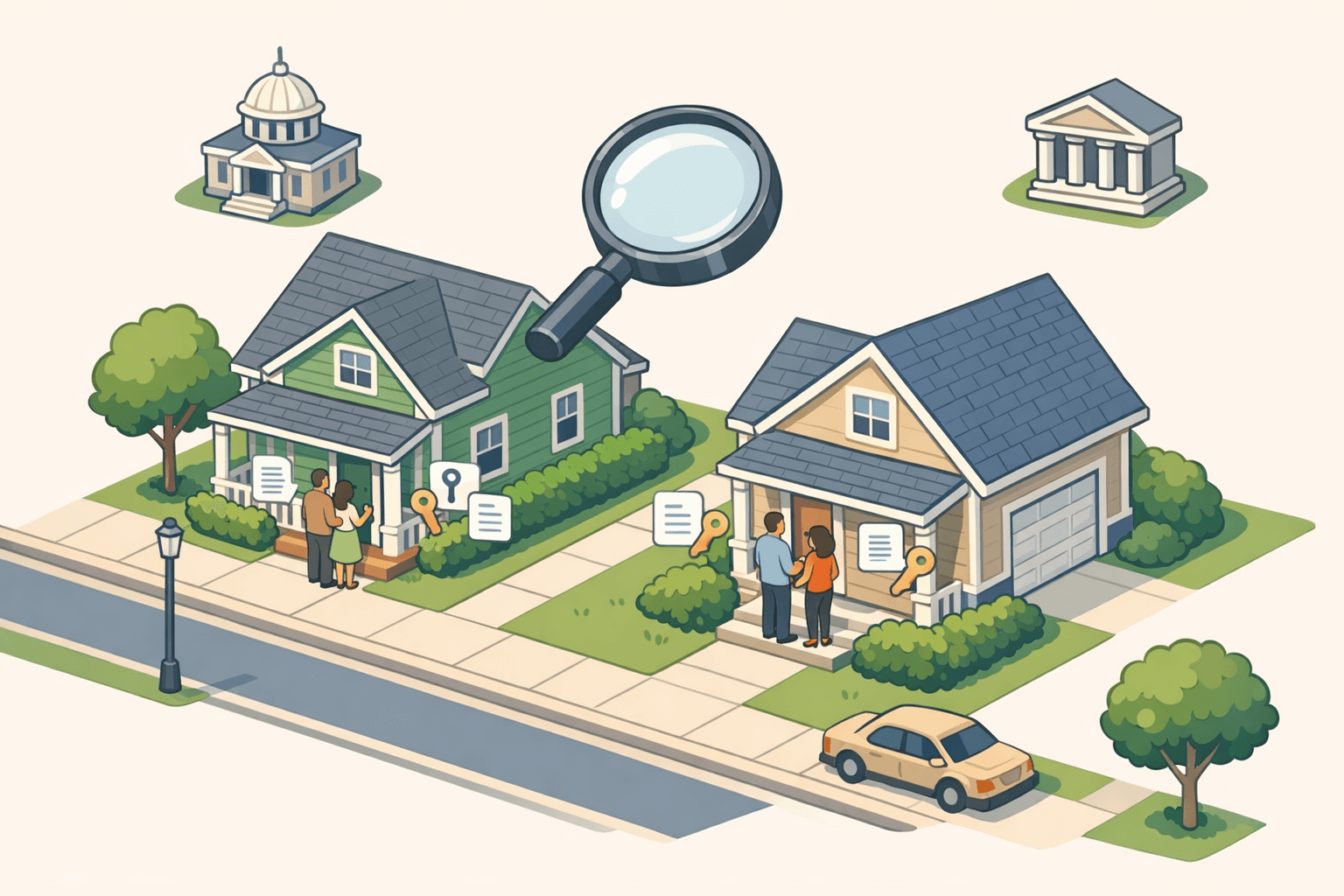
If you're shopping for a home loan, you've likely come across two of the most popular options: the conventional loan vs FHA debate. Both programs can help you buy a home, but they work quite differently — and choosing the wrong one could mean paying more than you need to over the life of your loan. Whether you're a first-time homebuyer, a repeat buyer, or someone rebuilding their credit, understanding how these two loan types compare is an essential first step toward making a smart financing decision. Let's walk through the key differences so you can move forward with confidence.
What Is a Conventional Loan?
A conventional loan is a mortgage that isn't backed by a federal government agency. Instead, these loans typically conform to guidelines set by Fannie Mae and Freddie Mac, the two government-sponsored enterprises that buy and guarantee mortgages in the secondary market. Because they're not insured by the government, conventional loans tend to hold borrowers to stricter qualification standards.
That said, conventional loans often come with more flexibility in terms of loan amounts, property types, and how mortgage insurance is handled. They're available through banks, credit unions, mortgage companies, and online lenders. For borrowers with strong credit and a solid financial profile, a conventional loan can be a very cost-effective path to homeownership.
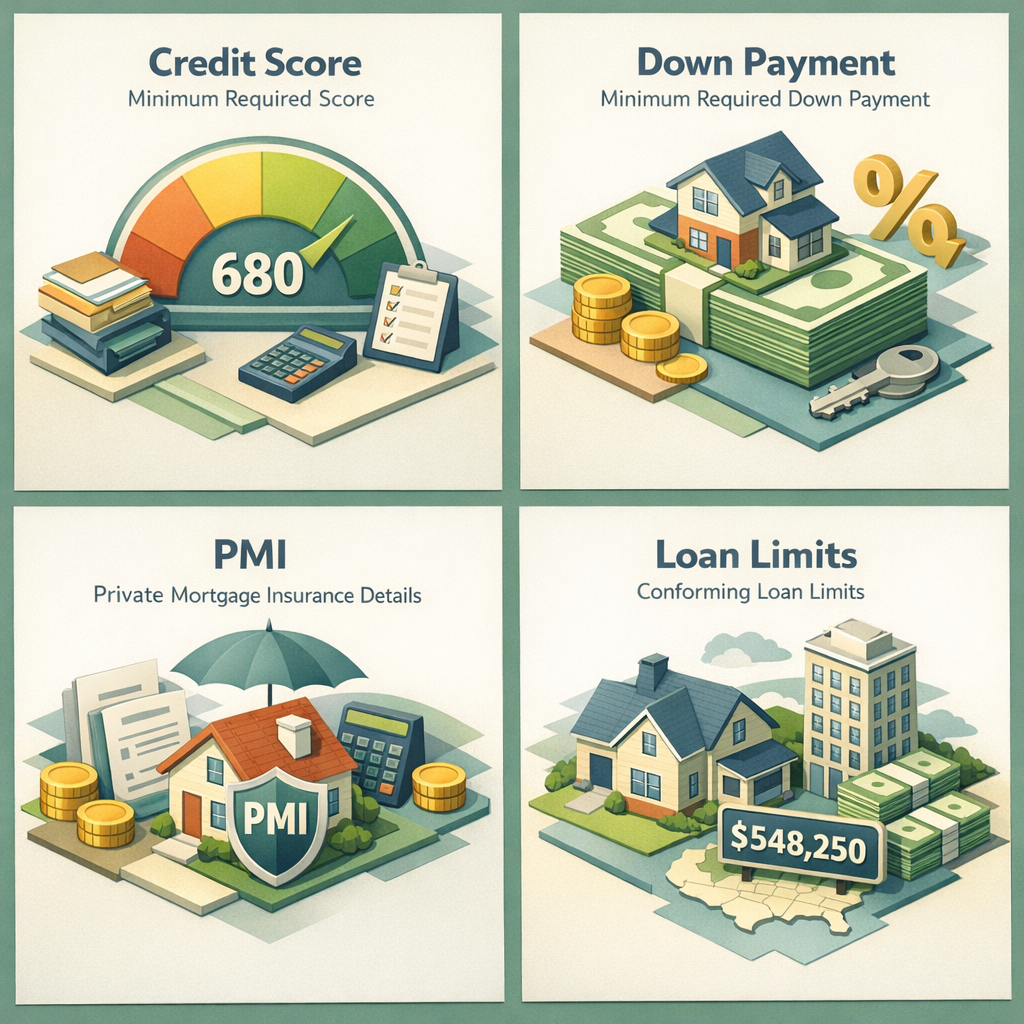
- Credit score: Lenders typically require a minimum score of 620, though higher scores unlock better rates.
- Down payment: As low as 3% for qualified buyers, though 20% eliminates private mortgage insurance (PMI).
- PMI: Required if your down payment is below 20%, but it can be removed once you reach 20% home equity.
- Loan limits: Subject to conforming loan limits set annually by the Federal Housing Finance Agency (FHFA).
What Is an FHA Loan and Who Does It Serve?
An FHA loan is a mortgage insured by the Federal Housing Administration, a division of the U.S. Department of Housing and Urban Development (HUD). Because the government backs these loans, lenders face less risk — which means they can extend financing to borrowers who might not qualify for conventional products.
FHA loans have been a cornerstone of affordable homeownership in the United States for decades. They're particularly well-suited for first-time homebuyers, borrowers with lower credit scores, or those who haven't had enough time to save a large down payment. However, the government backing comes at a cost: FHA loans require both an upfront mortgage insurance premium (MIP) and an annual MIP that typically lasts the life of the loan under certain conditions.
- Credit score: Borrowers with a score as low as 580 may qualify with a 3.5% down payment; scores between 500–579 may require 10% down.
- Down payment: As low as 3.5% for eligible borrowers.
- MIP: An upfront premium of 1.75% of the loan amount, plus an annual premium that varies by loan term and LTV.
- Loan limits: Set by HUD and vary by county and property type.
Credit Score and Eligibility Requirements Compared
One of the most significant differences in the conventional loan vs FHA comparison comes down to credit eligibility. FHA loans are generally more accessible for borrowers with credit challenges. If your score falls in the 580–619 range, an FHA loan may be your most realistic path to qualifying. Conventional loans, by contrast, typically require a minimum score of 620 — and to get the most competitive interest rates, a score of 700 or higher is usually preferred.
It's also worth noting that conventional lenders may apply stricter debt-to-income (DTI) ratio requirements. Most conventional loans cap the DTI at around 45%, though some automated underwriting systems may allow slightly higher ratios for well-qualified borrowers. FHA guidelines can be somewhat more flexible, sometimes permitting DTIs up to 50% or beyond in certain cases, depending on compensating factors.
If you've recently experienced a bankruptcy, foreclosure, or significant delinquency, FHA loans typically have shorter mandatory waiting periods before you can qualify again. This makes them a valuable tool for borrowers on a credit recovery journey who are eager to re-enter homeownership.
Down Payment and Upfront Cost Differences
Both loan types offer low down payment options, but the details matter. Conventional loans allow as little as 3% down through programs like Fannie Mae's HomeReady or Freddie Mac's Home Possible. FHA loans require a minimum of 3.5% down for borrowers with a credit score of 580 or above.
On the surface, the difference seems small. But when you factor in how mortgage insurance is structured, the total cost picture shifts considerably. With a conventional loan, PMI can be removed once you've built 20% equity in your home — either through payments, appreciation, or a combination of both. FHA's annual MIP, however, may remain for the life of the loan if your original down payment was less than 10%. For loans with a down payment of 10% or more, MIP lasts 11 years.
Additionally, FHA loans charge an upfront MIP of 1.75% of the loan amount, which is rolled into the loan balance. This means you're paying interest on that cost over time. Conventional loans don't have an equivalent upfront fee, which can make them more cost-efficient for borrowers who qualify. Over a 30-year loan, this difference in mortgage insurance costs could amount to tens of thousands of dollars.
Interest Rates: Which Loan Typically Costs Less Over Time?
Interest rates for both conventional and FHA loans fluctuate with market conditions, and neither type is universally cheaper. However, there are some general patterns worth understanding. FHA loan interest rates are often slightly lower than conventional rates — especially for borrowers with lower credit scores — because government backing reduces the lender's risk.
But a lower rate doesn't always mean a lower total payment. When you add in the FHA's mortgage insurance premiums, the effective monthly cost may actually be higher than a comparable conventional loan with PMI — particularly as your credit score improves. For borrowers with credit scores above 680 or 700, conventional loans with PMI may end up being more affordable on a monthly basis, and far less costly over the full loan term once PMI is removed.
The smartest approach is to run side-by-side cost comparisons using real rate quotes from multiple lenders. Many online mortgage calculators can help you estimate total interest paid and insurance costs across both loan types, giving you a clearer picture of which option truly fits your budget.
Property Requirements and Loan Limits to Know Before You Apply
Both loan programs have property standards, but FHA loans tend to be more prescriptive. FHA-approved appraisers evaluate homes not just for value, but also for safety, security, and soundness. If the property has issues like peeling paint, broken windows, or significant structural concerns, the seller may need to make repairs before the loan can close. This can occasionally complicate transactions, particularly with older homes or distressed properties.
Conventional loans follow appraisal standards as well, but they're generally considered less stringent in terms of property condition requirements. This can give buyers more flexibility when purchasing fixer-uppers or homes in need of cosmetic work.
Loan limits are another key consideration. FHA loan limits vary by county and are typically lower than conforming loan limits for conventional mortgages in higher-cost markets. If you're purchasing in an expensive metro area and need a larger loan, a conventional loan — or even a jumbo loan — may be the only viable path. Buyers in standard-cost markets are less likely to be affected by this distinction, but it's worth checking the limits for your specific area before committing to a program.
●Conclusion
The conventional loan vs FHA decision isn't one-size-fits-all — it depends on your credit profile, savings, the property you're buying, and your long-term financial goals. FHA loans shine for buyers with lower credit scores or limited down payment funds, while conventional loans tend to reward borrowers with stronger credit through lower long-term costs and more flexibility. The good news is that you don't have to figure this out alone. A knowledgeable mortgage professional can help you compare real numbers side by side and guide you toward the option that saves you the most money while still getting you into the home you want. Ready to explore your options? Connect with a LoanWise lending expert today and take the first confident step toward homeownership.