
Business Loan Solutions for Seasonal Properties
Real estate investors who specialize in seasonal properties face unique financial challenges that traditional financing often can't address. A Business Loan for Seasonal Businesses becomes crucial when managing properties that generate strong income during peak months but experience significant downturns during off-seasons. Whether you're operating vacation rentals in ski towns, beachfront properties, or college town investments, understanding how to structure financing around seasonal cash flow patterns could make the difference between portfolio growth and financial strain. With lending trends shifting and new opportunities emerging in 2026, investors now have access to more flexible financing options that align with seasonal business cycles.
Essential Financing Requirements Checklist
Essential financing requirements checklist covers the foundational elements investors need when seeking seasonal business financing. Understanding these requirements helps streamline the application process and improves approval odds.
- Maintain DSCR ratios between 1.0 and 1.25, with some lenders accepting seasonal adjustments based on annual performance rather than monthly calculations
- Document at least 12 months of rental income history showing seasonal patterns, including peak and off-season performance data
- Prepare comprehensive cash flow projections that demonstrate your ability to service debt during slower months through reserves or alternative income streams
- Establish credit scores above 620 for most programs, though some specialized seasonal property lenders may offer more flexible scoring models
Working Capital Strategies During Slow Seasons
Working capital for seasonal businesses becomes critical during months when rental income drops significantly. Smart investors implement multiple strategies to maintain liquidity throughout the year.
- Build cash reserves equal to 6-8 months of operating expenses during peak earning periods to cover mortgage payments and property maintenance during slow seasons
- Establish business lines of credit that can be drawn upon during low-income months and repaid when seasonal revenue returns
- Consider bridge financing options that provide short-term capital infusions during transition periods between peak seasons
- Diversify property portfolios across different seasonal markets to create year-round income streams that offset individual property downturns
Inventory Financing Approaches for Peak Demand
Inventory financing for seasonal demand helps investors prepare properties and acquire additional units before high-demand periods arrive. This strategic approach maximizes revenue potential when market conditions are most favorable.
- Secure pre-season renovation financing to upgrade properties before peak booking periods, potentially increasing nightly rates and occupancy
- Utilize fix and flip loans to quickly acquire and prepare distressed properties for the upcoming season
- Access equipment financing for seasonal amenities like hot tubs, outdoor furniture, or winter sports equipment that enhance property appeal
- Consider portfolio expansion loans that allow acquisition of multiple seasonal properties simultaneously for economies of scale
Step-by-Step DSCR Qualification Process
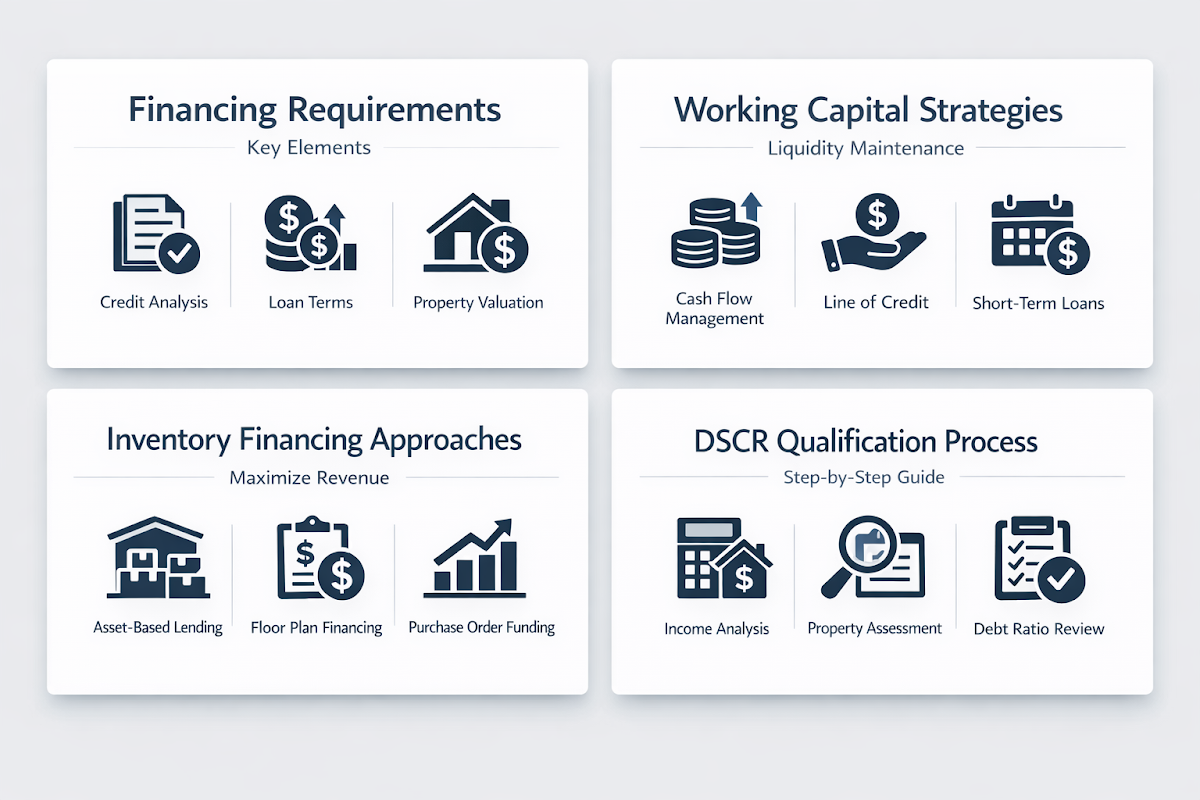
Step-by-step DSCR qualification process guides investors through the specific requirements for debt service coverage ratio loans, which may be more suitable for seasonal properties than traditional financing.
- Calculate your property's annual net operating income by totaling 12 months of rental receipts and subtracting operating expenses, taxes, and insurance
- Divide the annual NOI by your total annual debt service (principal and interest payments) to determine your DSCR ratio
- Prepare documentation showing consistent seasonal patterns over multiple years to demonstrate income predictability to lenders
- Work with lenders who understand seasonal real estate markets and can evaluate properties based on annual rather than monthly cash flow
Strategic Financial Structuring Methods
Strategic financial structuring methods can significantly improve loan qualification and terms for seasonal property investors. Smart structuring optimizes cash flow and enhances borrowing capacity.
- Structure loan payments to align with seasonal income patterns, potentially securing interest-only periods during slow months
- Combine multiple seasonal properties under single loan facilities to smooth out cash flow variations across different markets
- Negotiate seasonal modification clauses that allow temporary payment adjustments during documented low-income periods
- Establish entity structures that consolidate seasonal properties for stronger overall financial presentation to lenders
Market Opportunities in Current Lending Environment
Market opportunities in current lending environment show promising trends for seasonal property investors. The 2026 lending landscape offers improved access to non-traditional financing products that better serve investor needs. DSCR loan rates have moved into more favorable ranges between 6.00% and 7.50%, making refinancing existing seasonal properties more attractive. Mainstream acceptance of non-QM lending programs means investors can access financing based on property performance rather than personal income documentation. These market shifts create opportunities for expanding seasonal property portfolios and optimizing existing financing structures. Lenders are increasingly willing to work with investors who can demonstrate understanding of seasonal market dynamics and have strategies for managing cash flow variations. The expanding pool of DSCR investors indicates growing lender comfort with this investor-focused financing approach.
●Conclusion
Managing seasonal property investments requires specialized financing approaches that traditional lenders often can't accommodate. A Business Loan for Seasonal Businesses, whether structured as DSCR loans, bridge financing, or lines of credit, provides the flexibility needed to navigate the unique cash flow patterns of seasonal real estate. Success in this market depends on thorough preparation, strategic financial structuring, and working with lenders who understand seasonal business cycles. As the lending environment continues to evolve in 2026, investors who stay informed about new financing opportunities and maintain strong relationships with specialized lenders will be best positioned to grow their seasonal property portfolios. The key lies in matching your financing strategy to your property's income patterns and having the liquidity management systems in place to thrive during both peak and off-seasons.