Essential Business Loan Real Estate Investing Strategies
Real estate investing in 2026 presents unique opportunities for savvy investors who understand the financing landscape. With DSCR loan rates ranging from 6.00% to 7.50%, down from previous highs, investors can leverage more favorable terms to expand their portfolios. A business loan for real estate investing serves as the foundation for scaling operations, whether you're acquiring rental properties, funding fix and flip projects, or developing commercial real estate ventures. This comprehensive guide explores proven strategies that help investors navigate current market conditions and maximize returns on their investment capital.
Strategic DSCR Loan Tips for Portfolio Growth
Strategic DSCR loan approaches can significantly impact your ability to scale a real estate investment portfolio effectively. These financing tools offer unique advantages for investors who understand how to leverage them properly.
- Maintain robust cash reserves beyond minimum requirements. Lenders typically require specific reserve amounts, but keeping additional funds available demonstrates financial strength and may help secure better terms for future deals.
- Focus on properties that meet or exceed minimum DSCR thresholds. Properties generating strong rental income relative to debt service payments position you favorably with lenders and create more financing flexibility for portfolio expansion.
- Time your applications strategically during favorable rate periods. With current rates between 6.00% and 7.50%, investors might consider accelerating acquisition timelines to lock in these relatively lower costs compared to recent market conditions.
Fix and Flip Loan Rate Optimization Methods
Fix and flip loan rates directly impact project profitability, making rate optimization a critical component of successful short-term investment strategies. Understanding how to secure favorable terms can make the difference between profitable and marginal deals.
- Establish relationships with multiple lenders before you need funding. Having pre-existing connections allows you to compare offers quickly when time-sensitive opportunities arise, potentially saving thousands in financing costs.
- Present detailed renovation budgets and timelines to demonstrate project viability. Lenders often offer better rates to investors who show thorough planning and realistic profit projections, viewing them as lower-risk borrowers.
- Consider bridge financing for properties requiring extensive renovations. These short-term solutions might offer more flexibility than traditional fix and flip loans, especially for projects with uncertain completion timelines or complex renovation needs.
Rental Property Financing Preparation Essentials
Rental property financing success depends heavily on proper preparation and understanding lender requirements. Current market conditions create opportunities for investors who position themselves strategically.
- Prepare comprehensive rental market analysis for target properties. Documentation showing local rental rates, vacancy rates, and market trends helps lenders assess the investment's viability and may influence approval decisions positively.
- Organize financial documentation that showcases your investment experience. Experienced investors often receive more favorable terms, so presenting a track record of successful property management and positive cash flow strengthens your application significantly.
- Research local market conditions that support rental demand. Properties in areas with strong employment growth, population increases, or limited housing supply typically perform better, making them more attractive to lenders and improving financing terms.
Credit Score Requirements and Down Payment Strategies
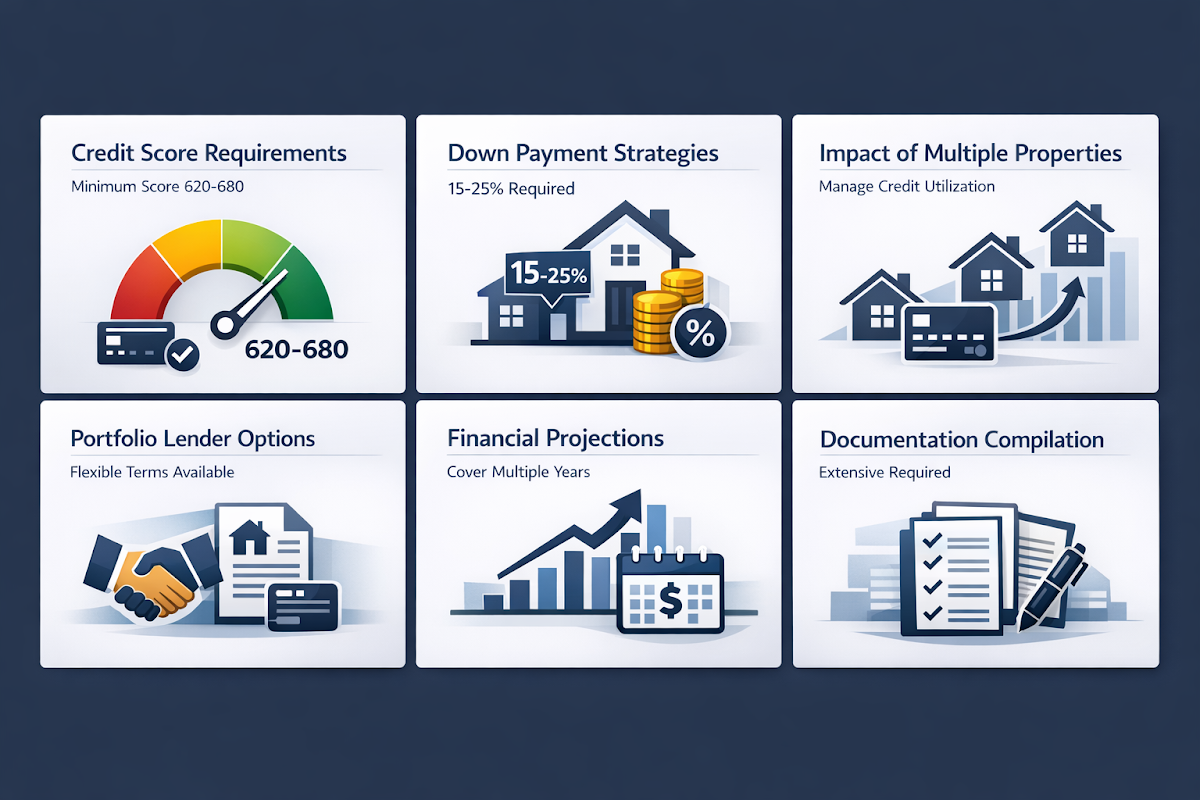
Credit Score Requirements and Down Payment Strategies form the foundation of securing favorable business loan for real estate investing terms. Understanding these requirements helps investors prepare effectively and optimize their financing options.
- Meet minimum credit score thresholds of 620-680 for most investment property loans. Higher scores typically unlock better interest rates and more flexible terms, making credit improvement a worthwhile investment before applying for financing.
- Prepare down payments of 15-25% depending on loan type and property classification. Having funds readily available demonstrates financial stability and may provide negotiating leverage with lenders during the approval process.
- Consider the impact of multiple property financing on credit utilization ratios. Managing credit carefully across multiple investment properties helps maintain strong credit profiles for future acquisitions and refinancing opportunities.
- Explore portfolio lender options for investors with multiple properties. These specialized lenders often have different credit requirements and may offer more flexible terms for experienced investors with proven track records.
Commercial Real Estate Loan Application Process
Commercial Real Estate Loan Application Process requires careful attention to detail and thorough preparation to achieve successful outcomes. The commercial lending environment differs significantly from residential investment property financing.
- Prepare detailed financial projections covering multiple years of property performance. Commercial lenders expect comprehensive analysis including operating expense projections, rental income forecasts, and market condition assessments that demonstrate long-term viability.
- Compile extensive documentation including property appraisals, environmental reports, and market studies. Commercial transactions typically require more due diligence than residential deals, and having complete documentation ready accelerates the approval timeline significantly.
- Understand that commercial loans often have different amortization schedules and balloon payment requirements. These terms affect cash flow planning and exit strategy development, making it essential to align loan structure with investment objectives and timeline expectations.
- Consider working with commercial mortgage brokers who specialize in investor financing. These professionals often have relationships with portfolio lenders and private capital sources that may not be accessible to individual investors approaching banks directly.
Regulatory Compliance and Reporting Requirements
Regulatory Compliance and Reporting Requirements have evolved significantly, with new FinCEN rules starting March 1, 2026, affecting how real estate investors structure their transactions. Staying compliant protects investments and avoids potential legal complications.
- Understand new FinCEN reporting requirements for non-financed real estate transfers involving legal entities or trusts. These regulations could impact how investors structure deals and manage compliance obligations moving forward.
- Maintain detailed records of all investment property transactions and entity structures. Proper documentation helps ensure compliance with reporting requirements and provides protection during potential audits or regulatory inquiries.
- Consult with qualified professionals regarding entity structuring and compliance strategies. Tax advisors and attorneys familiar with real estate investment regulations can help optimize structures while maintaining full compliance with current and evolving requirements.
- Stay informed about regulatory changes that might affect investment strategies and financing options. The regulatory environment continues evolving, and proactive awareness helps investors adapt their approaches to maintain competitive advantages while meeting all legal obligations.
●Conclusion
Successfully leveraging a business loan for real estate investing requires strategic planning, thorough preparation, and understanding of current market conditions. With DSCR loan rates currently ranging from 6.00% to 7.50%, investors have opportunities to secure favorable financing for portfolio expansion and refinancing existing properties. The key lies in maintaining strong financial profiles, understanding lender requirements, and staying compliant with evolving regulations. Whether you're pursuing rental property financing, fix and flip projects, or commercial real estate ventures, these strategies provide a foundation for building a profitable and sustainable investment portfolio. Take advantage of current market conditions while preparing for future opportunities by implementing these proven financing approaches.