
A job promotion is a big deal — and not just for your career. When your income rises, it can quietly reshape your entire financial picture, including your mortgage. If you're currently sitting on an adjustable-rate mortgage (ARM), that new salary might be the key that unlocks smarter refinancing choices. The best options for refinancing ARM mortgage with recent job promotion aren't one-size-fits-all, but they do share a common thread: your stronger financial profile can give lenders more confidence, which may translate into better rates and loan terms. This guide walks you through everything you need to know to make the most of your new income when refinancing your ARM.
Understanding How an ARM Works and Why Refinancing May Make Sense
An adjustable-rate mortgage starts with a fixed interest rate for an introductory period — often five, seven, or ten years — before it begins adjusting periodically based on market indexes. During that initial fixed period, many borrowers enjoy lower monthly payments compared to fixed-rate loans. But once the adjustment phase kicks in, rates can climb, and so can your monthly bill.
For homeowners who took out an ARM during a period of low rates, the adjustment period can feel like a ticking clock. If market interest rates have risen since you first took out the loan, your ARM's next adjustment could push your payment significantly higher. That's why many homeowners start exploring refinancing options before the adjustment window arrives.
A job promotion changes the equation in an important way. Lenders evaluate your debt-to-income ratio (DTI) when reviewing a refinance application. A higher salary lowers your DTI, which can make you a more attractive borrower. You may qualify for loan products that weren't accessible before, and you may receive more competitive interest rate offers. Understanding this connection between ARM refinance income change and lender eligibility is the first step toward making a confident refinancing decision.
How Your Promotion Affects Your Mortgage Qualification Profile
When you apply to refinance, lenders will look at several key factors: your credit score, home equity, employment history, and — most importantly for someone who just got promoted — your verifiable income. A recent job promotion can meaningfully strengthen your application, but the way lenders verify that income matters.
Documenting Your New Income Properly
If your promotion came with a salary increase, lenders will typically want to see pay stubs that reflect the new pay rate. Some lenders may also request an offer letter or promotion letter from your employer to confirm the change. In most cases, a recent promotion within the same field or with the same employer is viewed favorably because it suggests career stability rather than a risky career pivot.
However, if your new role includes a significant portion of variable income — such as bonuses or commissions — lenders may apply more scrutiny. Variable income is often averaged over a two-year period to determine qualifying income, which means a brand-new commission structure might not fully count right away. It's worth speaking with a loan officer about how your specific income structure will be evaluated before you apply.
The Role of Debt-to-Income Ratio in ARM Refinancing
Your DTI ratio is one of the most influential numbers in the refinancing process. It compares your total monthly debt obligations to your gross monthly income. Most conventional lenders prefer a DTI of 43% or lower, though some loan programs may allow for higher ratios under certain conditions. A salary increase from a promotion could reduce your DTI meaningfully, potentially opening doors to loan types or rate tiers that weren't available to you before.
Exploring the Best Options for Refinancing ARM Mortgage With Recent Job Promotion
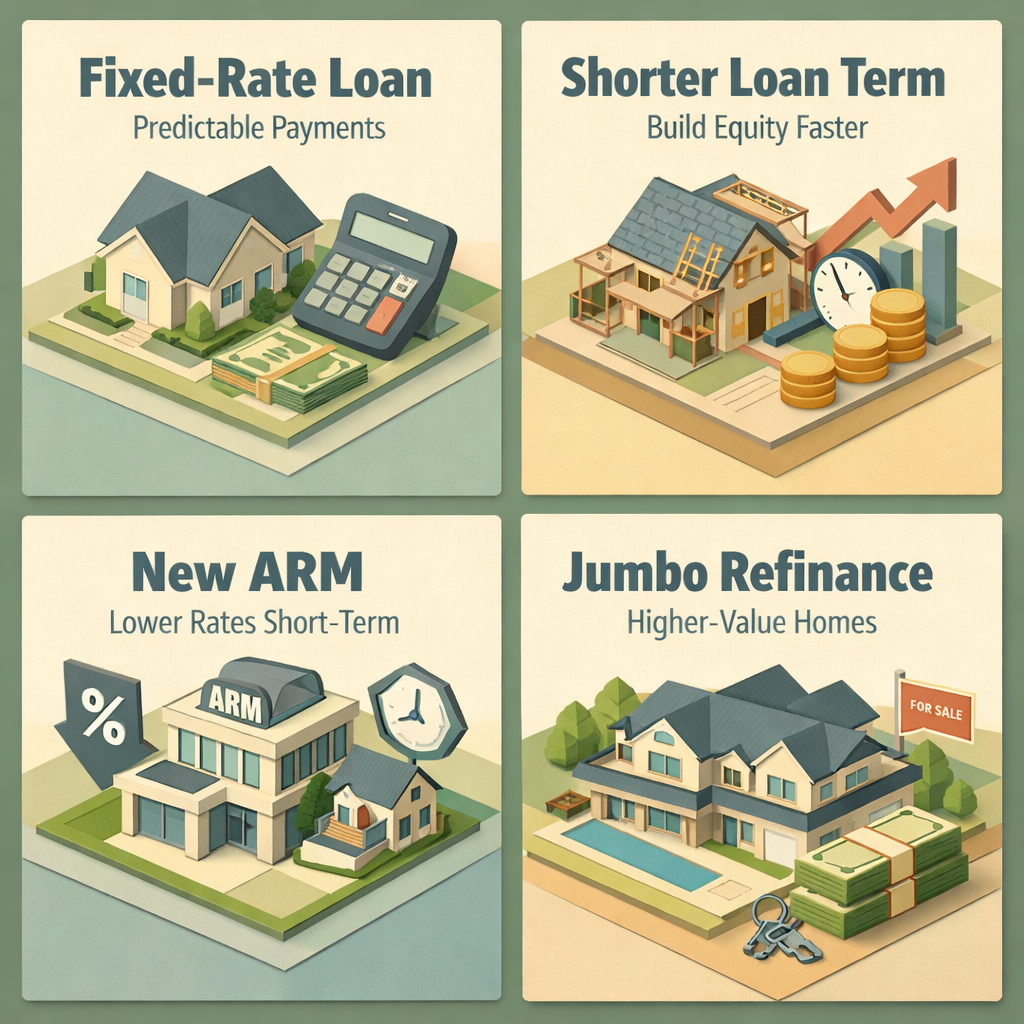
Now that you understand how your promotion enhances your borrower profile, let's look at the refinancing paths most worth considering. The best options for refinancing ARM mortgage with recent job promotion typically fall into a few categories depending on your financial goals.
Refinancing Into a Fixed-Rate Conventional Loan
For many homeowners, converting an ARM into a 30-year or 15-year fixed-rate conventional mortgage is the most straightforward move. Fixed-rate loans offer predictable monthly payments, which can make budgeting easier — especially if your new role comes with added financial responsibilities. With a stronger income, you may qualify for a lower interest rate on a conventional loan, and your improved DTI may help you avoid private mortgage insurance (PMI) requirements if your loan-to-value ratio is favorable.
Considering a Shorter Loan Term
A promotion that significantly boosts your monthly income might make a 15-year fixed-rate mortgage more manageable than it was before. Shorter-term loans typically carry lower interest rates than 30-year options, and you'll build home equity faster. The trade-off is a higher monthly payment, but if your new income comfortably supports it, this could save you a considerable amount in interest over the life of the loan.
Refinancing Into a New ARM With Better Terms
Not every homeowner wants or needs to leave the ARM world entirely. If you plan to sell or move within the next several years, refinancing into a new ARM with a longer initial fixed period — such as a 7/1 or 10/1 ARM — could give you lower rates in the short term without the uncertainty of immediate adjustments. Your improved income profile may help you qualify for a more competitive starting rate on a new ARM than your current loan offers.
Jumbo Refinancing for Higher-Value Homes
If your home's value exceeds conventional loan limits, you may be exploring a jumbo refinance. Jumbo loans tend to have stricter income and reserve requirements. A recent promotion that substantially increased your income could make you a stronger candidate for jumbo refinancing, which might come with more competitive pricing than your existing ARM.
Timing Your Refinance: When to Move After a Promotion
Timing is a real consideration when you've just received a promotion. There's often a question of how long you need to be in the new role before a lender will count that income. In many cases, if the promotion is with your current employer and your base salary has increased, lenders may accept the new income right away with proper documentation. A pay stub and promotion letter can often be enough to establish the higher income level.
However, if the promotion involved switching employers — even for a better title and salary — lenders may want to see at least 30 days of pay stubs at the new job before processing the application. Some lenders may want a longer employment history, particularly if you've changed industries.
Beyond income timing, you'll also want to think about where interest rates are heading. If your ARM's fixed period is nearing its end and market rates are rising, acting sooner may protect you from a higher variable rate. On the other hand, if market rates are high and expected to come down, waiting might make sense — though predicting rate movements is never certain. A trusted mortgage advisor can help you weigh these factors based on your specific loan timeline.
Key Steps to Prepare Your Refinance Application After a Salary Increase
Whether you're refinancing into a fixed-rate loan or a new ARM, the application process requires preparation. Here are the steps that can help your refinance go smoothly after a job promotion:
- Gather income documentation: Collect your most recent pay stubs, your promotion letter or offer letter, and your last two years of W-2s or tax returns. Lenders will use these to verify your income history and your new earning level.
- Check your credit report: A higher score can unlock better interest rates. Review your report for errors and address any outstanding issues before applying.
- Estimate your home's current value: Your loan-to-value ratio affects the rates and programs available to you. A home appraisal is typically required during refinancing, so having a rough sense of your home's current market value can help set expectations.
- Calculate your break-even point: Refinancing involves closing costs, which typically range from 2% to 5% of the loan amount. Calculate how many months it will take for your monthly savings to offset those upfront costs. If you plan to stay in the home long enough to break even, refinancing is likely worth it.
- Compare multiple lenders: Don't settle for the first refinance quote you receive. Shopping around — even with just a few lenders — can help you find a more competitive rate and lower fees.
Common Mistakes to Avoid When Refinancing Your ARM After a Promotion
A job promotion can create confidence, and that's a good thing. But a few missteps during the refinancing process could cost you. Here's what to watch out for:
Making Large Purchases Before Closing
Taking on new debt — like financing a car or opening new credit lines — between your promotion and your refinance closing can raise your DTI and hurt your application. It's generally wise to hold off on significant financial moves until after your refinance is finalized.
Overlooking Prepayment Penalties on Your Current ARM
Some ARM loans include prepayment penalty clauses. Before you commit to refinancing, review your current mortgage documents to see if paying off the loan early would trigger a fee. If there is a penalty, factor it into your break-even calculation.
Assuming Your Promotion Alone Guarantees Approval
A salary increase strengthens your application, but lenders evaluate the full picture. Credit score, home equity, existing debt, and employment history all play a role. Approach the process with a complete view of your financial profile rather than relying on income alone.
Ignoring the Impact of Closing Costs on Long-Term Savings
Refinancing is not free. Even if you secure a lower interest rate, high closing costs could erode your savings if you don't stay in the home long enough. Always run the numbers on your specific situation before moving forward.
●Conclusion
A job promotion represents one of the most meaningful moments in your financial journey — and it can genuinely improve your position as a mortgage borrower. Whether you're looking to escape the uncertainty of rate adjustments, shorten your loan term, or simply lock in a payment you can plan around, the best options for refinancing ARM mortgage with recent job promotion are more accessible than many homeowners realize. Your stronger income profile, combined with the right preparation and lender selection, could open the door to a mortgage that better fits your life today and tomorrow. Take the time to review your current ARM terms, document your new income carefully, and consult with a knowledgeable loan officer who can walk you through your options. The next chapter of your career might just be the catalyst for the next chapter of your homeownership story.