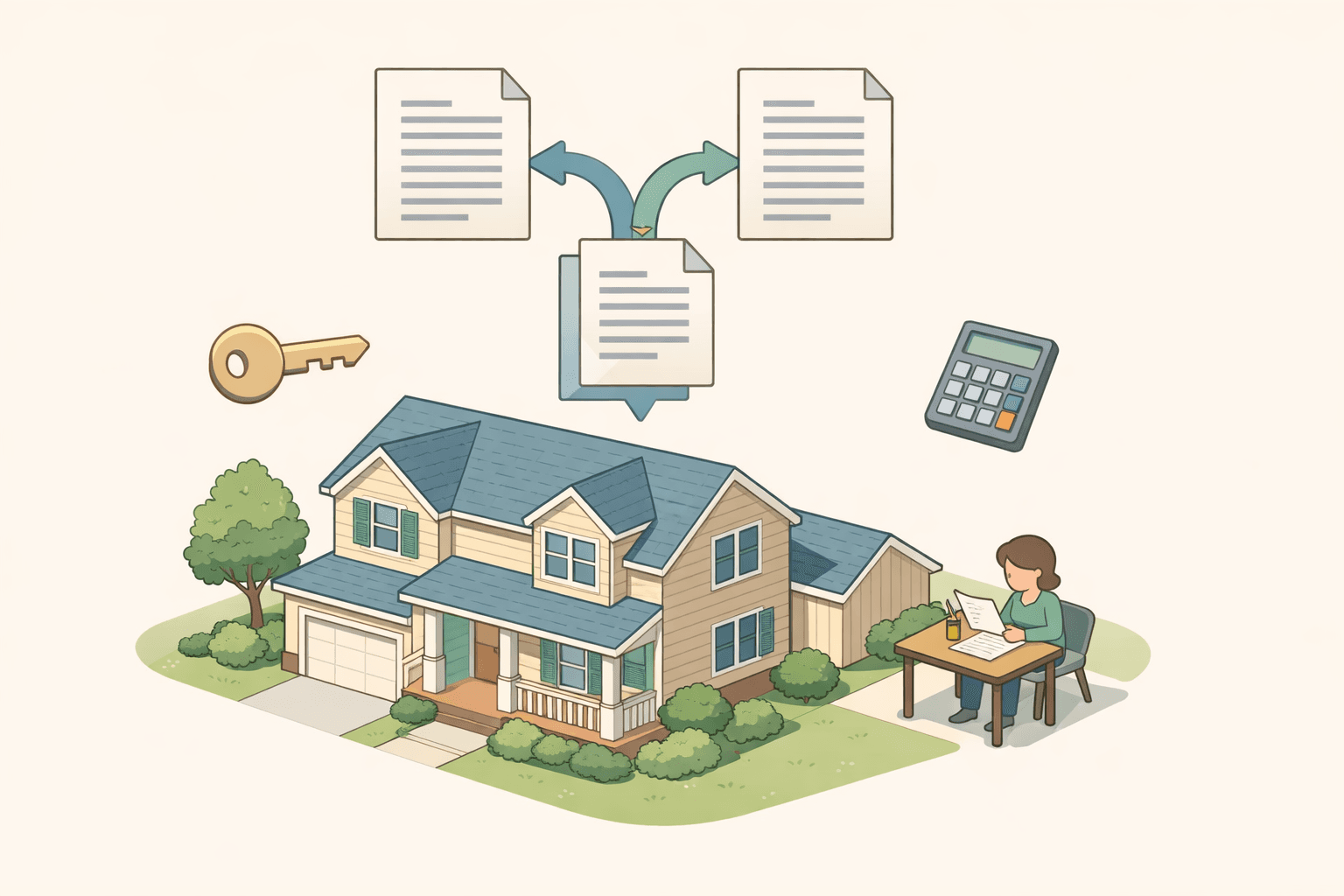
Managing two mortgage payments at once can feel overwhelming. Whether you took out a home equity loan, a HELOC, or a piggyback loan alongside your primary mortgage, you may be wondering how to simplify your finances. For many homeowners, exploring the best options for refinancing a conventional loan with a second mortgage is the first step toward regaining financial clarity. This guide walks you through what that process looks like, what lenders typically require, and which strategies might work best for your situation.
Understanding the Relationship Between a Conventional Loan and a Second Mortgage
Before diving into refinancing strategies, it helps to understand how a conventional loan and a second mortgage interact. A conventional loan is a primary mortgage not backed by a government agency — it's offered by private lenders and typically follows guidelines set by Fannie Mae or Freddie Mac. A second mortgage, on the other hand, is any additional loan secured by the same property, sitting in a subordinate lien position behind the first.
Common types of second mortgages include:
- Home equity loans: A lump-sum loan with a fixed interest rate and set repayment schedule
- Home equity lines of credit (HELOCs): A revolving line of credit tied to your home's equity
- Piggyback loans: A second loan taken simultaneously with the first to avoid private mortgage insurance (PMI)
Because the second lender holds a subordinate position, they face greater risk if the borrower defaults. This lien structure plays a major role in how refinancing options are evaluated and approved.
Why Homeowners Consider Refinancing When a Second Lien Is Involved
There are several compelling reasons why homeowners might seek to refinance a conventional loan with a second lien. Some of the most common motivations include:
- Lowering interest costs: If rates have dropped since you first borrowed, refinancing could reduce what you pay over the life of the loan
- Simplifying payments: Combining two loans into one monthly obligation can reduce stress and lower the chance of missed payments
- Eliminating PMI: If your home's value has risen, you may now have enough equity to refinance into a single loan without private mortgage insurance
- Accessing additional equity: A cash-out refinance may allow you to tap into built-up equity for home improvements, education, or other needs
- Improving loan terms: Switching from an adjustable-rate to a fixed-rate structure can provide more predictability in your monthly budget
Whatever the motivation, it's important to evaluate the full cost of refinancing — including closing costs, prepayment penalties, and how the transaction affects your second mortgage — before moving forward.
The Challenge of Subordination: What Happens to Your Second Mortgage
One of the biggest hurdles when refinancing a first mortgage is what to do with an existing second mortgage. When you refinance your primary loan, the new lender typically wants to be in the first lien position. But your second mortgage is already recorded against the property, which creates a legal complication.
There are generally two paths forward:
Subordination Agreement
In many cases, the second mortgage lender may agree to subordinate their lien — meaning they officially acknowledge that the new first mortgage takes priority over their loan. This process is called a subordination agreement. Not all second lenders will agree to this, and those that do may have their own requirements, such as a minimum loan-to-value ratio or a review of your updated financial profile.
Paying Off the Second Mortgage
If the second lender won't subordinate, or if you'd prefer a cleaner outcome, you could pay off the second mortgage as part of the refinance. This is often done through a cash-out refinance on the first loan, where the proceeds are used to retire the second mortgage entirely. Of course, this approach depends on having sufficient home equity to support the larger loan amount.
It's worth noting that subordination timelines can add several weeks to the refinancing process, so planning ahead is essential.
Best Options for Refinancing a Conventional Loan with a Second Mortgage
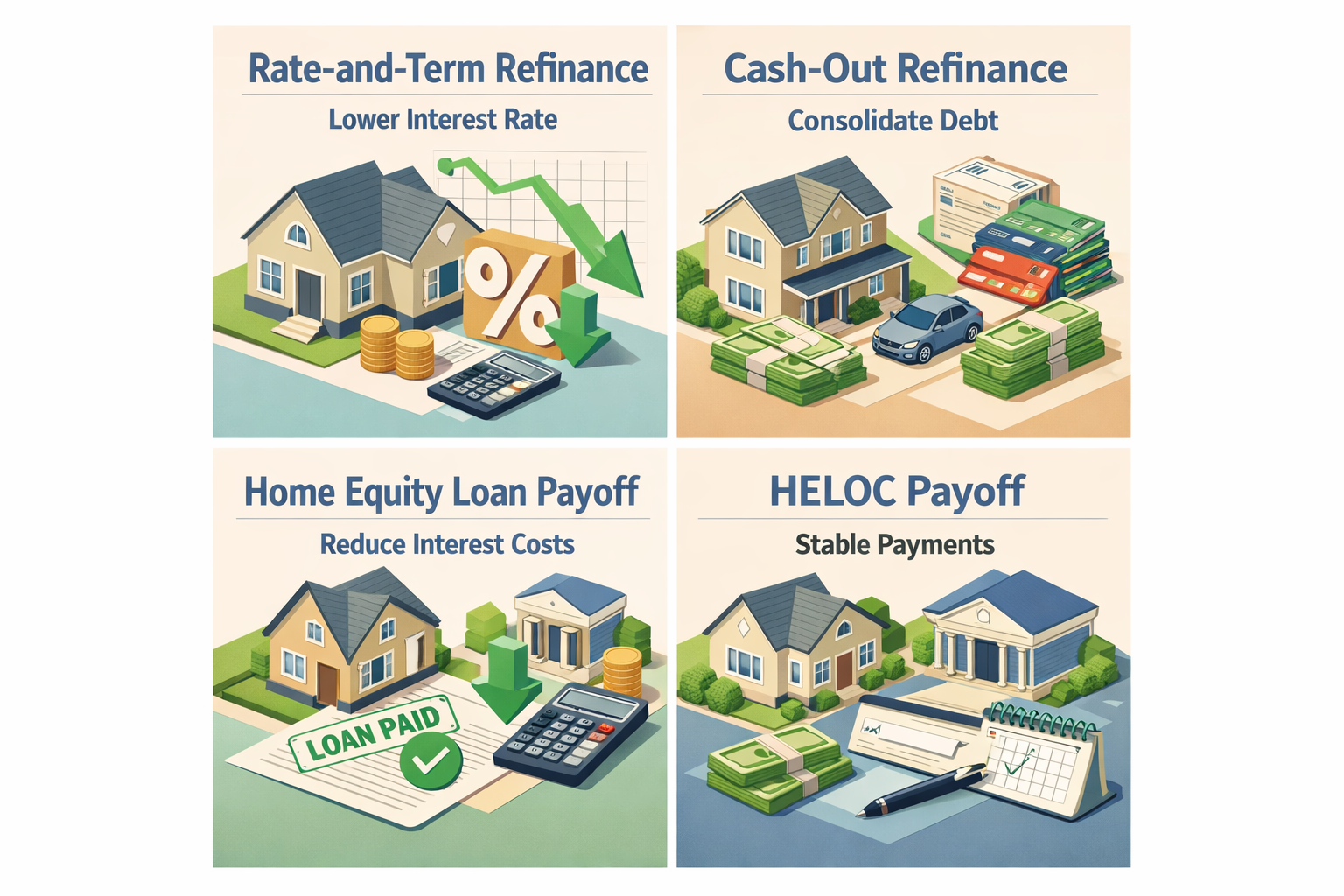
When it comes to the best options for refinancing a conventional loan with a second mortgage, the right strategy depends on your equity position, credit profile, financial goals, and the cooperation of your second lender. Here's a look at the most common and effective approaches:
Rate-and-Term Refinance with Subordination
If your goal is simply to secure a lower interest rate or better loan terms — without pulling out extra cash — a rate-and-term refinance may be your most straightforward path. With this approach, your existing second mortgage stays in place, and your second lender agrees to subordinate their lien to the new first mortgage. This option tends to be less disruptive and may involve lower closing costs than a full consolidation.
Cash-Out Refinance to Consolidate Both Loans
Consolidating debt with a mortgage refinance is one of the most popular strategies for homeowners juggling two loans. A cash-out refinance allows you to borrow more than you currently owe on your first mortgage and use those funds to pay off the second mortgage entirely. The result is a single monthly payment, often at a competitive fixed rate. However, lenders typically require that your combined loan-to-value (CLTV) ratio stays within acceptable limits — often around 80% for conventional loans — so your home's appraised value matters significantly here.
Home Equity Loan Payoff Through Refinance
If your second mortgage is a home equity loan with a higher fixed rate, rolling it into a refinanced first mortgage could reduce your blended interest cost. This works best when your home has appreciated enough to provide the necessary equity buffer and when your credit score supports favorable refinance terms.
HELOC Payoff and Consolidation
HELOCs often carry variable interest rates, which means your payments can fluctuate with market conditions. Refinancing your conventional loan and using proceeds to pay off the HELOC can lock in a stable rate and give you more predictable monthly expenses. This strategy can be particularly valuable during periods of rising interest rates.
Credit and Equity Requirements You Should Know
Lenders evaluating a refinance with a second mortgage in the picture will typically scrutinize several key financial factors. Understanding these requirements ahead of time can help you prepare a stronger application.
- Credit score: Most conventional refinance lenders look for a credit score of at least 620, though better rates are typically available to borrowers with scores of 740 or higher
- Debt-to-income ratio (DTI): Lenders generally prefer a DTI below 43% to 45%, though some may allow higher ratios depending on compensating factors
- Combined loan-to-value (CLTV): When both mortgages are considered together, lenders want to ensure the total borrowing doesn't exceed a safe percentage of your home's value — typically no more than 80% for a cash-out refinance without PMI
- Home equity: The more equity you have, the more refinancing options become available to you. Equity is typically determined by a new appraisal at the time of the refinance
- Payment history: A record of on-time payments on both mortgages strengthens your application considerably
If your financial profile doesn't currently meet these thresholds, there may be steps you can take — such as paying down existing debt or waiting for your home's value to rise — before pursuing a refinance.
Consolidating Debt with a Mortgage Refinance: What to Watch Out For
While consolidating debt with a mortgage refinance can be a powerful financial tool, it's not without its risks and trade-offs. Here are some important considerations to keep in mind:
Closing Costs Can Add Up
Refinancing typically involves closing costs that can range from 2% to 5% of the loan amount. If you're rolling two loans into one, the new loan balance may be larger, which means closing costs could be higher as well. It's important to calculate your break-even point — how long it will take for your monthly savings to offset these upfront costs.
Extending Your Loan Term
When you consolidate two loans into a new 30-year mortgage, you may be restarting the clock on your repayment timeline. Even if your monthly payment drops, you could end up paying more interest over the life of the loan. A shorter loan term — such as a 15- or 20-year mortgage — may help you save more in the long run, even if the monthly payment is slightly higher.
Risk of Losing Equity
A cash-out refinance increases the amount you owe on your home. If property values decline after your refinance, you could find yourself with less equity — or in some cases, owing more than your home is worth. Careful planning and a conservative approach to borrowing can help manage this risk.
Second Lender Cooperation Isn't Guaranteed
If you're pursuing a rate-and-term refinance that requires subordination, keep in mind that the second lender may decline the request or delay the process. Starting communications early and working with an experienced mortgage professional can help streamline this step.
How to Get Started on the Right Path
If you're ready to explore refinancing options, here are some practical steps to help you move forward with confidence:
- Review your current loan documents: Understand the terms of both your first and second mortgage, including interest rates, remaining balances, and any prepayment penalties
- Check your home's current value: You can get a rough idea from online tools, but a formal appraisal will be needed during the refinance process
- Pull your credit report: Look for any errors that could be dragging your score down and address them before applying
- Contact your second lender early: If you're planning a rate-and-term refinance, reach out to your second lender about their subordination policies before you get too far along
- Compare multiple lenders: Rates, fees, and program availability vary widely from lender to lender. Shopping around can save you thousands over the life of the loan
- Work with a knowledgeable mortgage advisor: A professional who understands the nuances of refinancing with a second lien can help you identify the most cost-effective path and avoid common pitfalls
Taking a methodical, well-informed approach to this process is likely to produce better outcomes than rushing into the first offer that comes along.
●Conclusion
Refinancing when you have two mortgages requires a bit more planning than a standard refinance, but it's absolutely manageable with the right guidance. Whether your goal is to simplify your payments, lock in a better rate, or eliminate a high-interest second loan, there are real strategies that may work in your favor. The best options for refinancing a conventional loan with a second mortgage will always depend on your unique financial picture — your equity, credit, loan balances, and the cooperation of your lenders. At LoanWise, we're here to help you sort through the details and find a path that makes sense for your goals. Reach out today to speak with one of our mortgage specialists and take the first step toward a smarter financial future.