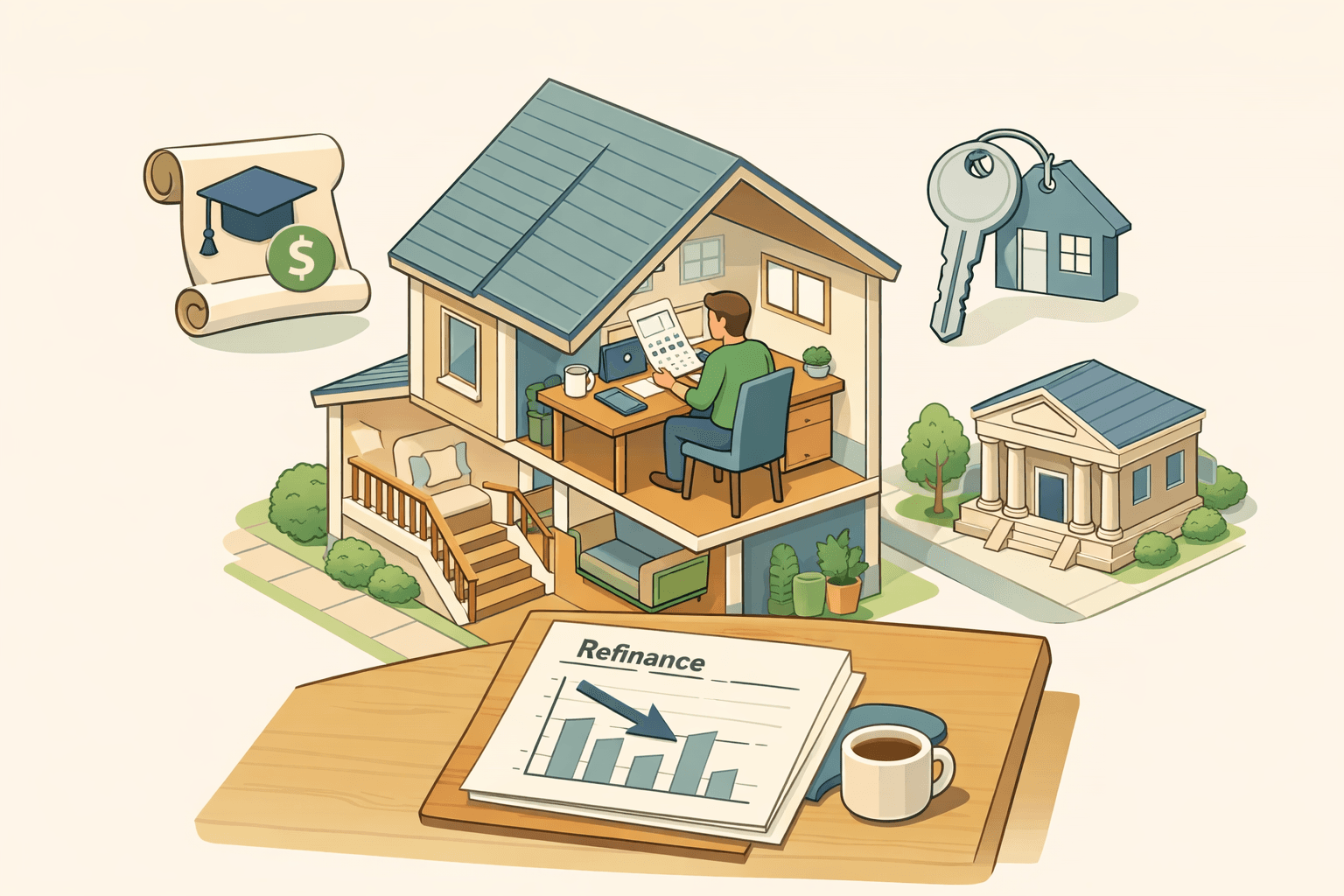
If you're a homeowner with a 7/1 adjustable-rate mortgage and a substantial amount of student loan debt, you may be approaching a critical financial crossroads. The seven-year fixed period on your ARM is either nearing its end or has already passed, which means your interest rate could soon adjust — potentially upward. At the same time, your student loan obligations are likely affecting your debt-to-income ratio and overall borrowing power. The good news is that the best options for refinancing a 7/1 ARM mortgage with significant student loan debt are more accessible than many homeowners realize. With the right strategy, you may be able to secure a more stable mortgage product, reduce your monthly payment burden, and put yourself on a stronger financial footing for years to come.
Understanding How a 7/1 ARM Works and Why Timing Matters
A 7/1 ARM is a hybrid adjustable-rate mortgage that offers a fixed interest rate for the first seven years, after which the rate adjusts annually based on a benchmark index plus a margin set by your lender. During the initial fixed period, many borrowers enjoy lower rates compared to traditional 30-year fixed mortgages, which is part of why these products were so attractive — especially to younger professionals who anticipated income growth over time.
However, once that seven-year window closes, your rate could rise significantly depending on current market conditions and the specific caps built into your loan. Rate adjustment caps typically limit how much the interest rate can change at each adjustment period and over the life of the loan, but even capped increases can meaningfully raise your monthly payment. For homeowners already stretched by student loan payments, this added financial pressure can become difficult to absorb.
This is why the timing of your refinance decision matters so much. Ideally, you'd want to begin exploring your refinancing options at least six to twelve months before your ARM's first adjustment date. This gives you enough time to evaluate loan products, compare lenders, improve your financial profile if needed, and complete the application process without feeling rushed.
How Student Loan Debt Affects Your Mortgage Refinance Eligibility
One of the most important factors lenders evaluate when you apply to refinance an ARM with student loans on your record is your debt-to-income ratio, commonly referred to as DTI. This ratio compares your total monthly debt obligations — including your mortgage, student loan payments, car loans, credit cards, and any other recurring debts — to your gross monthly income. Most conventional lenders prefer a DTI at or below 43%, though some programs may allow slightly higher ratios depending on compensating factors.
Student loan debt can push your DTI higher than you might expect, particularly if you're on an income-driven repayment plan with low current payments. Interestingly, lenders may calculate your student loan obligation differently depending on the loan type and the repayment status. For example, under some conventional guidelines, lenders may use a percentage of the total outstanding balance to estimate your monthly obligation, even if your actual payment is lower. This could make your DTI look less favorable than your real financial situation suggests.
Your credit score is another key factor. Consistent, on-time student loan payments may actually work in your favor by demonstrating responsible borrowing behavior. However, missed payments or high utilization of revolving credit alongside your student debt could reduce your score and make qualifying for competitive refinance rates more challenging. Understanding how lenders view your full credit picture is an essential first step before you apply.
Fixed-Rate Refinancing: The Most Common Path to Payment Stability
For most homeowners exploring student loan debt mortgage refinance scenarios, converting an adjustable-rate mortgage into a fixed-rate loan is the most straightforward way to eliminate rate uncertainty. A 30-year fixed mortgage offers predictable monthly payments for the entire life of the loan, which can be especially valuable when your budget is already committed to student loan repayment.
A 15-year fixed mortgage is another option worth considering if your income can comfortably support higher monthly payments. The trade-off is that you'd pay off your home in half the time and typically at a lower interest rate than a 30-year product. For borrowers with strong income growth since they originally took out their ARM — which is common among professionals who took on student debt for graduate or professional degrees — the 15-year route may offer compelling long-term savings.
When comparing fixed-rate options, it's important to account for closing costs, which typically range from two to five percent of the loan amount. You'll want to calculate your break-even point — the number of months it takes for your monthly savings to offset the upfront costs of refinancing. If you plan to stay in the home well beyond that point, refinancing into a fixed-rate loan could make strong financial sense.
Lower ARM Rate Options: When Staying Adjustable Still Makes Sense
Not every homeowner with a 7/1 ARM should automatically convert to a fixed-rate loan. In some situations, exploring lower ARM rate options — such as refinancing into a new 5/1 ARM, 7/1 ARM, or even a 10/1 ARM — might provide short-term relief with lower initial rates, particularly if you have a clear plan to sell the home or pay it off before the next adjustment period begins.
For instance, if you're confident you'll relocate within the next five to seven years due to career plans or family changes, a new ARM with a fresh fixed period could offer a lower starting rate than a 30-year fixed, potentially freeing up cash flow to accelerate student loan payoff in the near term. This approach requires discipline and a realistic assessment of your timeline, but it can be a smart tactical move for the right borrower profile.
It's also worth noting that some lenders offer ARM products with more favorable caps or margin structures than your current loan. Even if you stay in an adjustable product, refinancing into a better-structured ARM could mean smaller potential rate increases down the road. Always review the periodic cap, lifetime cap, and index used to calculate rate adjustments before committing to any ARM refinance.
Strategies to Strengthen Your Application Before You Apply
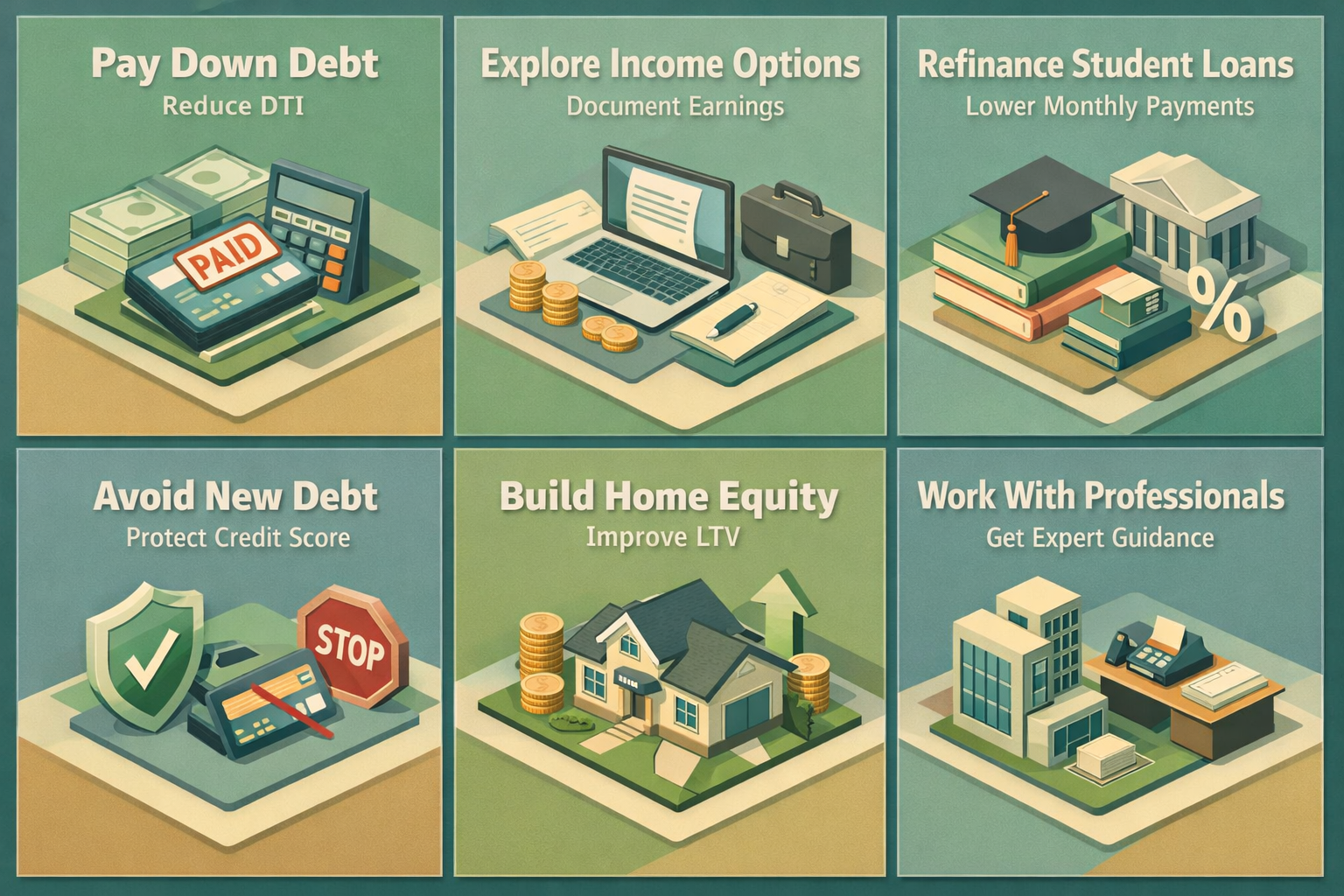
Given that student loan debt may already be affecting your DTI, taking deliberate steps to improve your financial profile before applying for a refinance can meaningfully expand your options and help you qualify for better rates. Here are some practical strategies to consider:
- Pay down revolving debt: Reducing credit card balances can lower your DTI and improve your credit utilization ratio, both of which may positively influence your credit score and lender perception.
- Explore income documentation options: If you've received raises, bonuses, or started a side business since taking out your original mortgage, make sure your income documentation reflects your current earning power. Higher verifiable income directly improves your DTI.
- Consider refinancing student loans separately: In some cases, refinancing your student loans to a lower interest rate or longer repayment term may reduce your monthly obligation enough to bring your DTI within qualifying range. Be aware, however, that refinancing federal student loans into private loans means losing access to income-driven repayment plans and potential forgiveness programs.
- Avoid taking on new debt: Opening new credit accounts or making large purchases on credit before your mortgage refinance closes can negatively impact your credit score and DTI calculations.
- Build home equity: If your home has appreciated in value since you purchased it, a formal appraisal may reveal usable equity that could improve your loan-to-value ratio and qualify you for better terms.
Exploring Government-Backed Refinance Programs for Added Flexibility
Homeowners with existing government-backed mortgages may have access to streamlined refinance options that could make the process easier even with student loan debt. For example, FHA loans offer a Streamline Refinance program that typically requires less documentation and may not require a new appraisal, which can be helpful if you're concerned about current home values in your area.
VA borrowers may have access to the Interest Rate Reduction Refinance Loan (IRRRL), which allows eligible veterans and service members to refinance an existing VA loan with minimal paperwork and potentially lower costs. If your original ARM was a VA loan, this could be a particularly efficient path to a more stable fixed rate.
For homeowners with conventional loans, the Fannie Mae and Freddie Mac guidelines around student loan debt have evolved over the years to offer more flexibility in how IBR and other income-driven student loan payments are calculated in the DTI. It may be worth working with a mortgage professional who understands the nuances of these guidelines, as the difference in how your student loan payment is counted could be the factor that makes or breaks your application.
It's also worth asking lenders about portfolio loan products, which are mortgages that lenders keep on their own books rather than selling to the secondary market. These products sometimes offer more flexible underwriting criteria for borrowers with complex financial profiles, including those balancing significant student loan obligations with a home refinance.
Working With a Mortgage Professional to Find the Best Options for Refinancing a 7/1 ARM Mortgage With Significant Student Loan Debt
Navigating the refinance process when you have both an adjustable-rate mortgage and significant student loan debt is genuinely complex. There are multiple loan products to compare, income and DTI calculations that vary by lender and program, and timing considerations that could affect both your mortgage rate and your student loan repayment strategy. This is precisely where working with an experienced mortgage professional can make a significant difference.
A knowledgeable loan officer can help you model different refinance scenarios — comparing a 30-year fixed versus a new ARM versus a 15-year fixed — and show you how each option interacts with your student loan obligations over time. They can also identify which lenders are most accommodating of borrowers with your specific financial profile and help you avoid common pitfalls that could delay or derail your application.
When you're evaluating the best options for refinancing a 7/1 ARM mortgage with significant student loan debt, don't settle for the first quote you receive. Shopping multiple lenders — including banks, credit unions, and mortgage brokers — gives you a clearer picture of available rates and terms. Even a small difference in interest rate can translate to thousands of dollars in savings over the life of a refinancing a 7/1 ARM mortgage.
●Conclusion
Refinancing a 7/1 ARM when you're carrying meaningful student loan debt requires careful planning, but it's absolutely achievable with the right approach. By understanding how lenders evaluate your DTI, exploring both fixed and adjustable refinance products, taking steps to strengthen your financial profile, and working with a mortgage professional who understands your situation, you may be able to transition out of your adjustable-rate loan into a more stable and affordable mortgage. The key is to start early, compare your options thoroughly, and make decisions that align with your broader financial goals — not just your immediate payment concerns. LoanWise is here to help you every step of the way.