Starting a seasonal bakery is an exciting venture, but turning your passion for baked goods into a profitable business often requires solid financing. For many aspiring bakery owners, an SBA loan can be one of the most accessible and affordable funding paths available. That said, the application process can feel overwhelming — especially when you're not sure where to begin. Understanding what documents are needed for an SBA loan for a seasonal bakery startup is the first step toward a successful application. This guide breaks down everything you'll likely need to gather, explains why each document matters, and offers practical tips to help small business owners and entrepreneurs prepare with confidence.
Why SBA Loans Are a Strong Fit for Seasonal Bakery Startups
The U.S. Small Business Administration offers loan programs specifically designed to help small business owners access capital when traditional bank financing may be out of reach. For a seasonal bakery startup, this can be a game-changer. SBA loans — particularly the SBA 7(a) and SBA Microloan programs — typically offer lower down payments, longer repayment terms, and more flexible eligibility requirements compared to conventional commercial loans.
Seasonal businesses do come with unique challenges, though. Lenders may be cautious about inconsistent revenue cycles, which means your documentation needs to tell a clear and compelling financial story. A well-organized SBA bakery loan application that addresses these concerns head-on can significantly improve your chances of approval. The good news is that the SBA does recognize the viability of seasonal operations, and with the right preparation, your bakery concept can stand out.
Whether you're planning a holiday cookie shop, a summer farmers' market booth, or a full-scale seasonal production kitchen, lenders will want to see that you've thought through the business model, projected your cash flow honestly, and have the personal financial standing to support the venture.
Core Business Documents Every Applicant Must Prepare
When it comes to knowing what documents are needed for an SBA loan for a seasonal bakery startup, the list starts with foundational business paperwork. These documents establish your legal identity as a business and demonstrate that you're operating — or preparing to operate — in a legitimate, structured way.
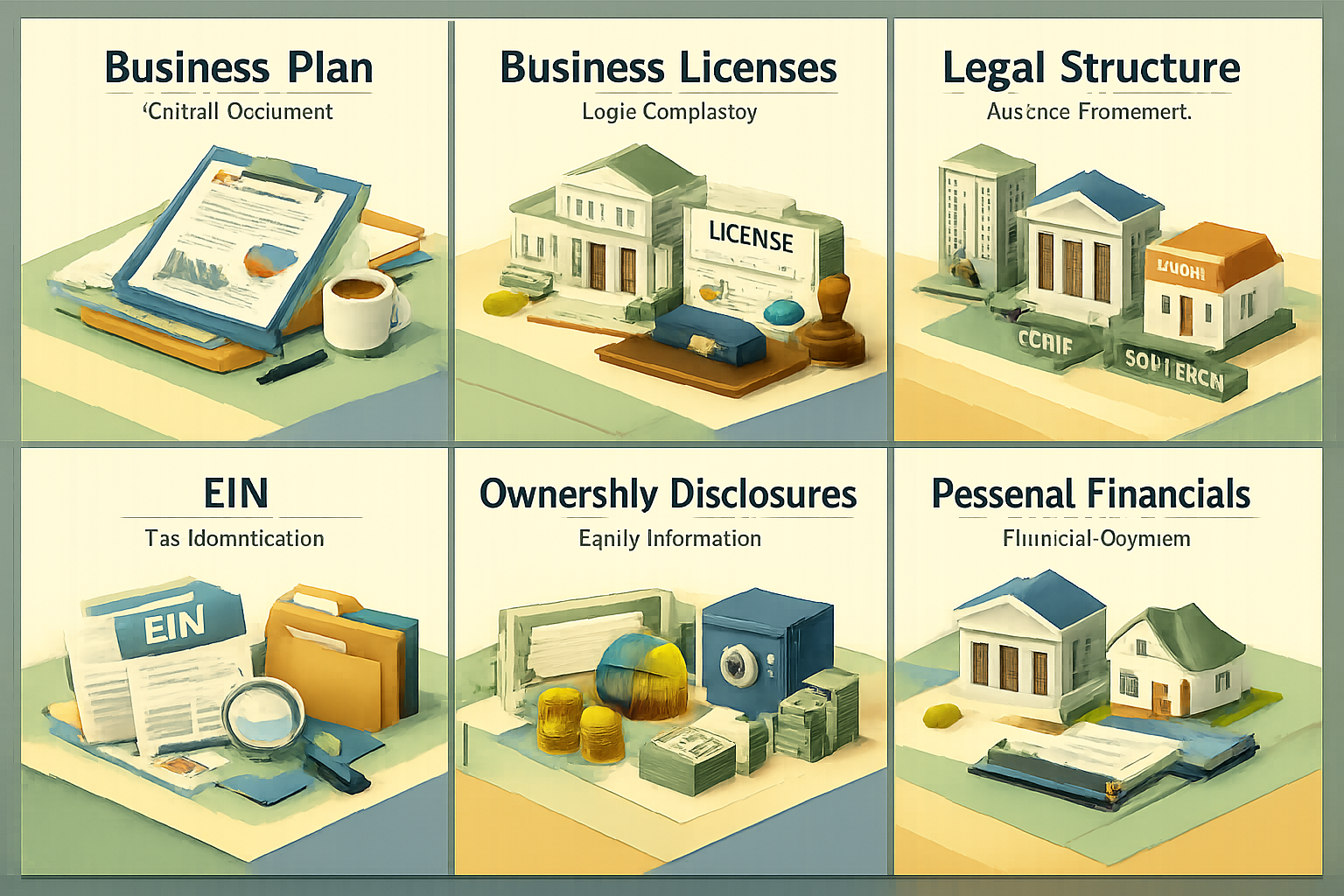
- Business plan: This is arguably the most critical document for a startup. Your business plan should include an executive summary, a description of your bakery concept, target market analysis, details about your seasonal operating schedule, marketing strategy, and a clear explanation of how you intend to use the loan funds.
- Business licenses and permits: You'll need to show that your bakery will be legally compliant. This may include a general business license, food handler's permit, cottage food license (if applicable), and any state or local health department approvals.
- Business legal structure documents: Provide your Articles of Incorporation, LLC operating agreement, or partnership agreement — whichever applies to your business structure.
- Employer Identification Number (EIN): Your EIN, issued by the IRS, identifies your business for tax purposes and is required for most SBA applications.
- Ownership and affiliation disclosures: SBA lenders require detailed information about all business owners holding 20% or more equity, including any affiliated businesses.
Having these documents organized and ready before you approach a lender can help streamline the review process and signal to loan officers that you're a prepared and serious applicant.
Financial Projections and Cash Flow Statements for Seasonal Operations
One of the biggest challenges for a seasonal bakery startup is demonstrating financial viability when the business doesn't operate year-round. Lenders will want to understand how you plan to manage cash flow during off-peak months, cover fixed costs, and repay the loan. This is where detailed financial projections become essential.
For startups, you won't have historical financials to submit — so projected financial statements carry extra weight. You should prepare the following:
- Projected income statement (profit and loss): Break this down month by month, clearly showing your peak operating season and the revenue you expect to generate during that period.
- Cash flow projection: Show how money will move in and out of the business throughout the year, including how you'll handle expenses during your off-season. This might include personal savings, a business line of credit, or other income streams.
- Balance sheet projection: Outline your anticipated assets, liabilities, and owner's equity at the end of your first operating year.
- Break-even analysis: Demonstrate the sales volume needed to cover your costs, which helps lenders assess the realism of your financial plan.
It's important to base your projections on reasonable assumptions and to explain those assumptions clearly. Lenders may be skeptical of overly optimistic revenue forecasts, so grounding your numbers in local market research, comparable bakery benchmarks, or industry data can strengthen your case considerably.
Personal Financial Records and Credit History Requirements
Because your bakery is a startup without an established credit profile, SBA lenders will place significant emphasis on your personal financial history. Your personal creditworthiness serves as a proxy for how likely you are to manage business debt responsibly.
Here's what you'll typically need to provide on the personal side:
- Personal financial statement (SBA Form 413): This form summarizes your personal assets, liabilities, and net worth. It gives lenders a snapshot of your overall financial health outside of the business.
- Personal tax returns: Most lenders will request two to three years of personal federal tax returns. These help verify your income history and demonstrate your ability to support debt repayment if the business faces a slow season.
- Personal credit report authorization: You'll need to consent to a credit pull. While SBA guidelines don't set a rigid minimum score, many lenders prefer a personal credit score of at least 650 to 680 for startup applicants, though this may vary.
- Resume or background statement: Some lenders request a brief professional biography or resume that highlights any relevant experience in food service, hospitality, business management, or entrepreneurship.
If your personal credit history has some blemishes, it's worth addressing them proactively in your application. A brief explanation letter acknowledging past challenges and outlining steps you've taken to improve your financial standing can help humanize your application and demonstrate accountability.
Collateral Documentation and How It Affects Your SBA Bakery Loan Application
The SBA generally requires lenders to take collateral when it's available, though the absence of collateral alone typically won't disqualify a borrower for loans under certain thresholds. For a seasonal bakery startup, collateral might include personal assets such as real estate, equipment, or savings. Understanding what to document is important for your SBA bakery loan application.
Common collateral-related documents include:
- Real estate appraisals or mortgage statements: If you're pledging personal or business property as collateral, you'll need documentation of its current value and any existing liens.
- Equipment list and valuations: For a bakery, this might include commercial ovens, mixers, refrigeration units, and display cases. A detailed list with estimated values helps lenders assess the collateral pool.
- Vehicle titles: If a delivery vehicle is part of your business model, its title and estimated value may be relevant to collateral discussions.
It's worth noting that the SBA's microloan program — which offers loans up to $50,000 through nonprofit intermediary lenders — may have more flexible collateral requirements and could be a good fit for a smaller seasonal bakery concept. Checking with multiple SBA-approved lenders can help you find the program that aligns best with your needs.
SBA-Specific Forms and Additional Requirements to Know
Beyond general business and financial documents, the SBA requires several program-specific forms as part of any formal SBA loan application. Familiarizing yourself with these forms early can prevent delays in the review process.
- SBA Form 1919 – Borrower Information Form: This form collects detailed information about the borrower and the business, including ownership structure, criminal history disclosures, and eligibility certifications.
- SBA Form 912 – Statement of Personal History: Required for certain applicants, this form addresses any prior legal issues or financial judgments.
- SBA Form 148 – Unconditional Guarantee: Owners with 20% or more equity are typically required to provide a personal guarantee, which this form documents.
- Debt schedule: A comprehensive list of all existing personal and business debts, including credit cards, student loans, auto loans, and any other financial obligations.
- Use of proceeds statement: A clear breakdown of exactly how you intend to spend the loan funds — for example, equipment purchases, leasehold improvements, initial inventory, or working capital.
Some lenders may also request additional items such as a signed lease agreement for your bakery space, vendor quotes for equipment, or letters of intent from wholesale clients if you plan to supply products to other businesses. Staying in close communication with your lender throughout the process is key, as requirements can vary by institution.
Tips for Strengthening Your Seasonal Bakery Startup Loan Application
Knowing what documents are needed for an SBA loan for a seasonal bakery startup is important, but how you present that information matters just as much. Here are some practical strategies that could help improve your application's overall strength:
- Work with an SBA-preferred lender: Preferred lenders have delegated authority to approve loans without full SBA review, which may speed up the process significantly.
- Consult a SCORE mentor or SBDC advisor: The SBA's Small Business Development Centers and SCORE mentorship network offer free guidance to entrepreneurs. An advisor can review your business plan and financial projections before you submit your application.
- Be transparent about your seasonal model: Rather than downplaying the seasonal nature of your business, lean into it. Explain your operating calendar clearly, show how you've planned for off-season cash flow management, and highlight any strategies that extend your revenue window — such as online sales, catering, or wholesale partnerships.
- Organize your documents in a clear package: Presenting a well-organized, labeled application package signals professionalism and makes the lender's review process easier.
- Address gaps proactively: If you lack experience in running a food business, consider enrolling in a relevant course or partnering with an experienced food industry professional to strengthen your credibility.
The SBA loan process can take several weeks to a few months, so starting your preparation early — ideally three to six months before you need the funds — gives you the best chance of securing financing in time for your launch or peak season.
●Conclusion
Preparing a successful loan application for your seasonal bakery startup doesn't have to be overwhelming. By understanding what documents are needed for an SBA loan for a seasonal bakery startup and gathering them systematically, you put yourself in a much stronger position to secure the funding your business needs. From your business plan and financial projections to SBA-specific forms and personal financial records, each piece of documentation helps tell your story to a lender. Take your time, seek guidance where needed, and approach the process with the same care and craft you'd bring to your best recipes. At LoanWise, we're here to help small business owners navigate the lending landscape with clarity and confidence — reach out today to explore your SBA financing options.