For many aspiring homeowners, buying a house feels just out of reach — especially when it comes to credit requirements. That's where FHA loans can make a real difference. Backed by the Federal Housing Administration, these government-insured mortgages are designed to help buyers with less-than-perfect credit histories get into a home. Understanding the FHA loan credit score requirements is one of the most important first steps you can take on your homebuying journey. Whether you're a first-time buyer or someone working to rebuild your financial standing, knowing what lenders look for could help you plan smarter and move forward with confidence.
What Is an FHA Loan and Why Does It Matter for Buyers
An FHA loan is a type of mortgage that's insured by the Federal Housing Administration, a division of the U.S. Department of Housing and Urban Development (HUD). Because the government backs these loans, lenders take on less risk — and that typically means they're more willing to approve borrowers who might not qualify for an FHA loan for a conventional mortgage.
This makes FHA loans particularly popular among first-time homebuyers, buyers with limited savings for a down payment, and individuals who have experienced financial setbacks in the past. The program has helped millions of Americans achieve homeownership who might otherwise have been turned away by traditional lending standards.
One of the most appealing features of an FHA loan is its more flexible approach to credit qualification. While conventional loans often require higher credit scores and larger down payments, FHA guidelines are generally more accommodating — though borrowers still need to meet specific thresholds to qualify.
FHA Loan Credit Score Requirements at a Glance
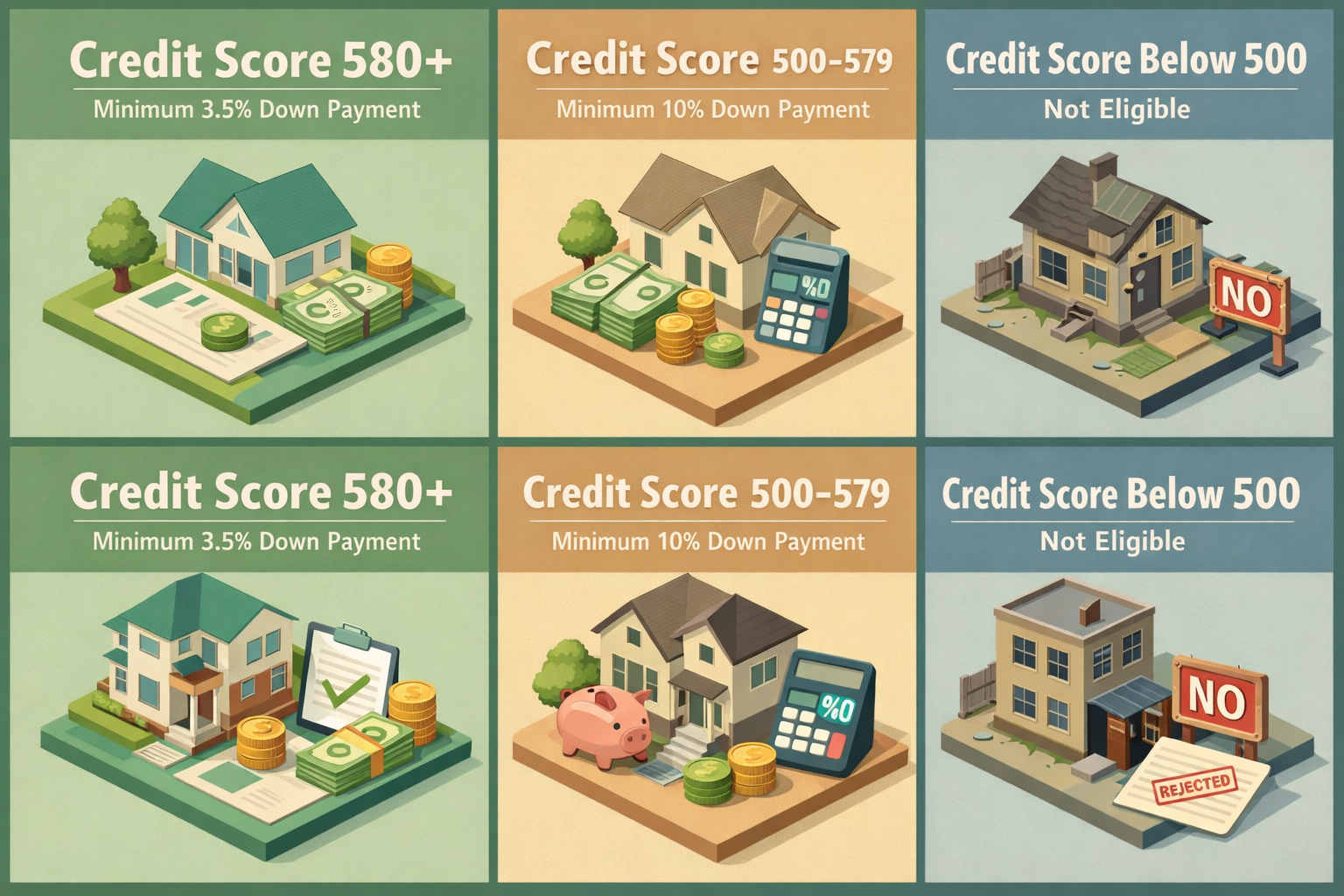
The FHA loan credit score requirements are tiered, meaning the score you have will directly affect the terms of your loan — particularly the size of your required down payment. Here's how the general structure typically works:
- Credit score of 580 or higher: Borrowers who meet this threshold may qualify for the FHA's minimum down payment of 3.5% of the home's purchase price. This is the most accessible entry point for many buyers.
- Credit score between 500 and 579: Buyers in this range may still be eligible for an FHA loan, but lenders typically require a higher down payment of at least 10%. This compensates for the added risk associated with lower credit scores.
- Credit score below 500: Borrowers who fall below this floor generally do not qualify for an FHA-insured mortgage under standard program guidelines.
It's important to note that these are the FHA's minimum guidelines. Individual lenders often apply their own overlays — additional requirements that go above and beyond what the FHA mandates. Some lenders may set their own minimum credit score higher, such as 620 or even 640, so it's worth shopping around to find a lender whose standards align with your financial profile.
How Lenders Look Beyond Your Credit Score
While your credit score is a central factor in FHA loan approval, it's far from the only one. Lenders review a broader picture of your financial health when evaluating your application. Understanding these additional factors can help you prepare a stronger case for approval.
Debt-to-Income Ratio
Your debt-to-income (DTI) ratio compares your monthly debt obligations to your gross monthly income. FHA guidelines generally allow a DTI of up to 43%, though some lenders may permit higher ratios under certain circumstances. Keeping your DTI as low as possible strengthens your application considerably.
Employment and Income History
Lenders typically want to see a steady employment history, often spanning at least two years. Consistent income demonstrates your ability to make regular mortgage payments. Self-employed borrowers may face additional documentation requirements, such as tax returns and profit-and-loss statements, to verify income stability.
Credit History Quality
Beyond the raw score, lenders look at the details within your credit report. Late payments, collections, bankruptcies, and foreclosures can all weigh heavily on your application. FHA guidelines do allow borrowers with past bankruptcies or foreclosures to apply after meeting specific waiting periods, which could be a helpful pathway for those rebuilding their financial lives.
Steps You Can Take to Strengthen Your FHA Loan Application
If your credit score isn't quite where you'd like it to be, don't lose hope. There are several practical strategies that may help you improve your chances of approval before applying for an FHA loan.
Review Your Credit Reports for Errors
Under federal law, you're entitled to a free copy of your credit report from each of the three major bureaus — Equifax, Experian, and TransUnion — once per year. Reviewing these reports carefully could reveal errors or outdated information that's dragging your score down. Disputing inaccuracies and having them corrected could result in a meaningful score improvement.
Pay Down Existing Debt
Your credit utilization ratio — the percentage of your available revolving credit that you're currently using — plays a significant role in your credit score. Paying down balances on credit cards and other revolving accounts could lower your utilization and give your score a boost. Aim to keep utilization below 30% if possible.
Avoid Opening New Credit Accounts
Each time you apply for new credit, a hard inquiry is recorded on your report, which can temporarily lower your score. In the months leading up to your mortgage application, it's wise to avoid opening new credit cards or taking out other loans. Keeping your credit profile stable signals reliability to mortgage lenders.
Build a Consistent Payment History
Payment history is the single largest factor in most credit scoring models. Making all your bill payments on time — even for utilities or rent, if reported — can gradually improve your score over time. Even a few months of consistent on-time payments could make a noticeable difference.
Understanding FHA Mortgage Insurance and Its Cost Impact
One aspect of FHA loans that borrowers should carefully consider is mortgage insurance. Because the FHA insures lenders against borrower default, it charges mortgage insurance premiums (MIP) to the borrower. These costs come in two forms:
- Upfront MIP: Typically charged as a percentage of the loan amount at closing. This can often be rolled into the loan balance rather than paid out of pocket.
- Annual MIP: Paid monthly as part of your mortgage payment. The rate and duration can vary depending on your loan term, loan amount, and the size of your down payment.
It's worth noting that unlike private mortgage insurance (PMI) on conventional loans, FHA mortgage insurance may remain in place for the life of the loan in certain scenarios — particularly when the down payment is less than 10%. This is an important cost consideration when comparing FHA loans to other mortgage options. Speaking with a knowledgeable loan officer can help you run the numbers and determine whether an FHA loan is the most cost-effective path for your situation.
Comparing FHA Loans to Conventional Mortgage Options
It's helpful to understand how FHA loans stack up against conventional mortgages so you can make the most informed decision for your homebuying goals.
Conventional loans — those not backed by the government — typically require higher credit scores, often in the 620 to 740 range or above, depending on the lender and loan type. Down payments may be as low as 3% for qualified buyers through certain conventional programs, but borrowers with lower scores may need to put down more.
For buyers with credit scores in the mid-to-upper 600s and moderate debt levels, a conventional loan might offer a lower overall cost due to potentially more favorable mortgage insurance arrangements. On the other hand, for buyers with scores closer to 580 or those who've experienced past financial difficulties, an FHA loan may provide a more accessible path to homeownership.
The right choice depends on your unique financial profile. Factors like your credit score, available savings, income, and long-term homeownership goals all play a role. Consulting with a mortgage professional who can compare loan scenarios side by side is often the best way to determine which option serves you best.
●Conclusion
Understanding FHA loan credit score requirements is a foundational step toward making your homeownership dream a reality. Whether your score is already above 580 or you're working toward that milestone, the FHA loan program offers a meaningful pathway into homeownership for buyers across a wide range of financial backgrounds. The key is to know where you stand, take deliberate steps to strengthen your application, and work with a lender who understands your goals. At LoanWise, we're here to help you navigate every stage of the mortgage process — from evaluating your credit profile to finding the loan program that fits your life. Ready to take the next step? Connect with a LoanWise mortgage specialist today and find out what you qualify for.