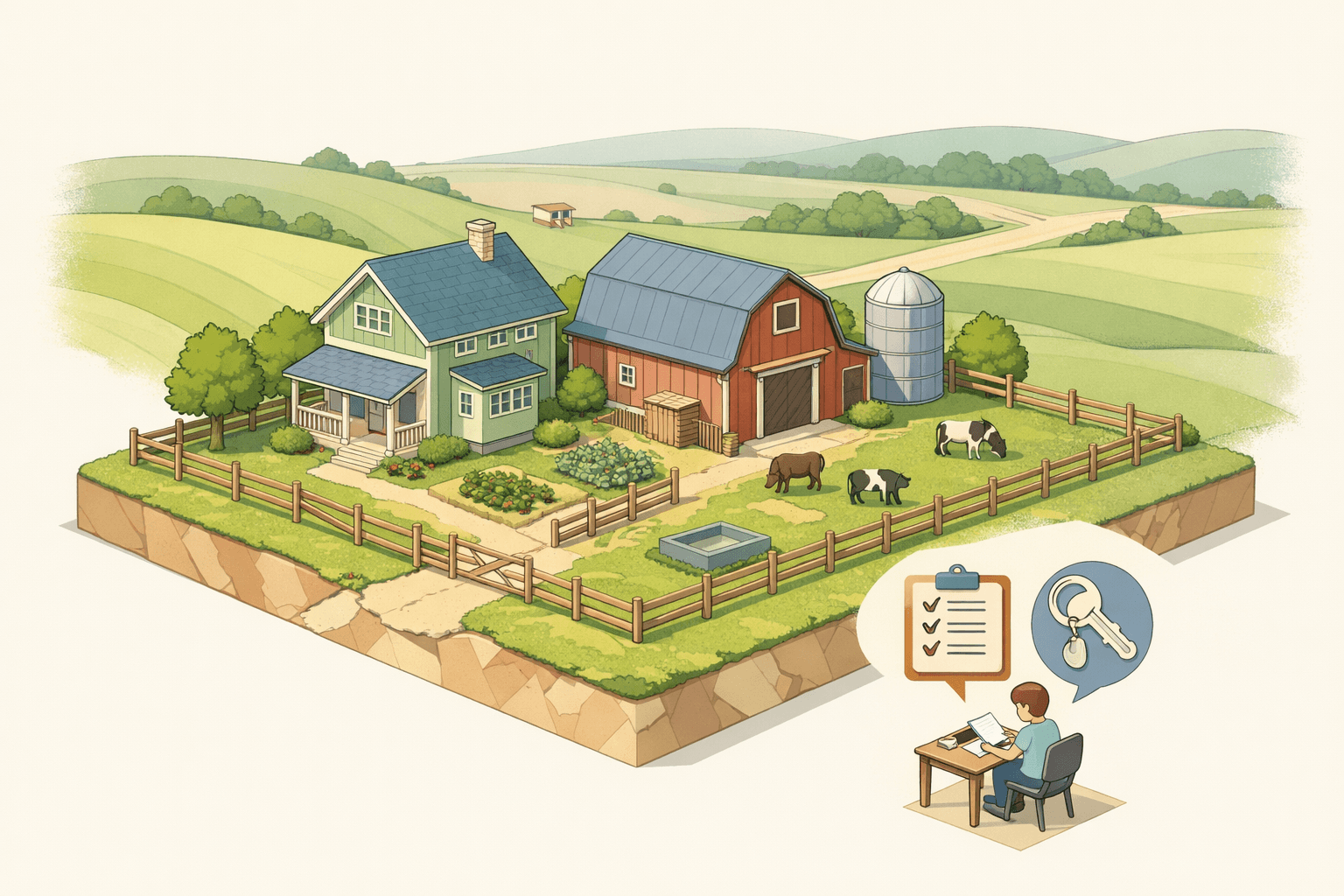
If you're exploring USDA financing to purchase or refinance an existing farm property, one of the first practical questions you'll face is: what are closing costs for a USDA loan on an existing farm? It's a fair and important question. Closing costs can add thousands of dollars to your total transaction, and knowing what to expect ahead of time helps you plan wisely. USDA farm loans are designed to make agricultural landownership more accessible, particularly for moderate-income borrowers in rural areas. But like any mortgage product, they come with fees and charges that must be settled before — or at — closing. This guide walks you through every major cost category, explains what's unique about farm and rural property transactions, and shares practical strategies for managing your closing-day expenses.
How USDA Farm Loan Programs Work for Existing Properties
Before diving into the specific costs, it helps to understand the landscape of USDA lending for farms. The U.S. Department of Agriculture offers several loan programs relevant to farm buyers, most notably through the Farm Service Agency (FSA) and the Rural Development (RD) division. Each program serves a slightly different audience and property type.
The FSA Farm Ownership Loan is specifically designed for purchasing farmland, including existing farm properties. It's available to beginning farmers, veterans, and those who may not qualify for conventional agricultural financing. The USDA Rural Development Single Family Housing Guaranteed Loan Program may also apply if the existing farm property includes a primary residence and meets rural eligibility requirements.
When you're purchasing an existing farm rather than constructing a new one, the transaction closely resembles a traditional real estate purchase. There will be a purchase agreement, a title search, an appraisal, and a formal closing process — all of which generate fees. Understanding which program you're using is critical, because the specific closing costs structure can vary between FSA direct loans, FSA guaranteed loans, and USDA Rural Development guaranteed loans.
- FSA Direct Loans: The government acts as the lender. Fees may be lower in some categories but the process is highly structured.
- FSA Guaranteed Loans: A commercial lender issues the loan with a USDA guarantee. Lender fees apply in addition to USDA-specific charges.
- USDA RD Guaranteed Loans: Commonly used when the farm includes a residence in a USDA-eligible rural area. Standard mortgage closing costs apply alongside a guarantee fee.
Knowing which program you're applying under will help you anticipate which fees to expect are set by the government and which are set by your private lender.
Breaking Down the Common Closing Costs on a USDA Farm Loan
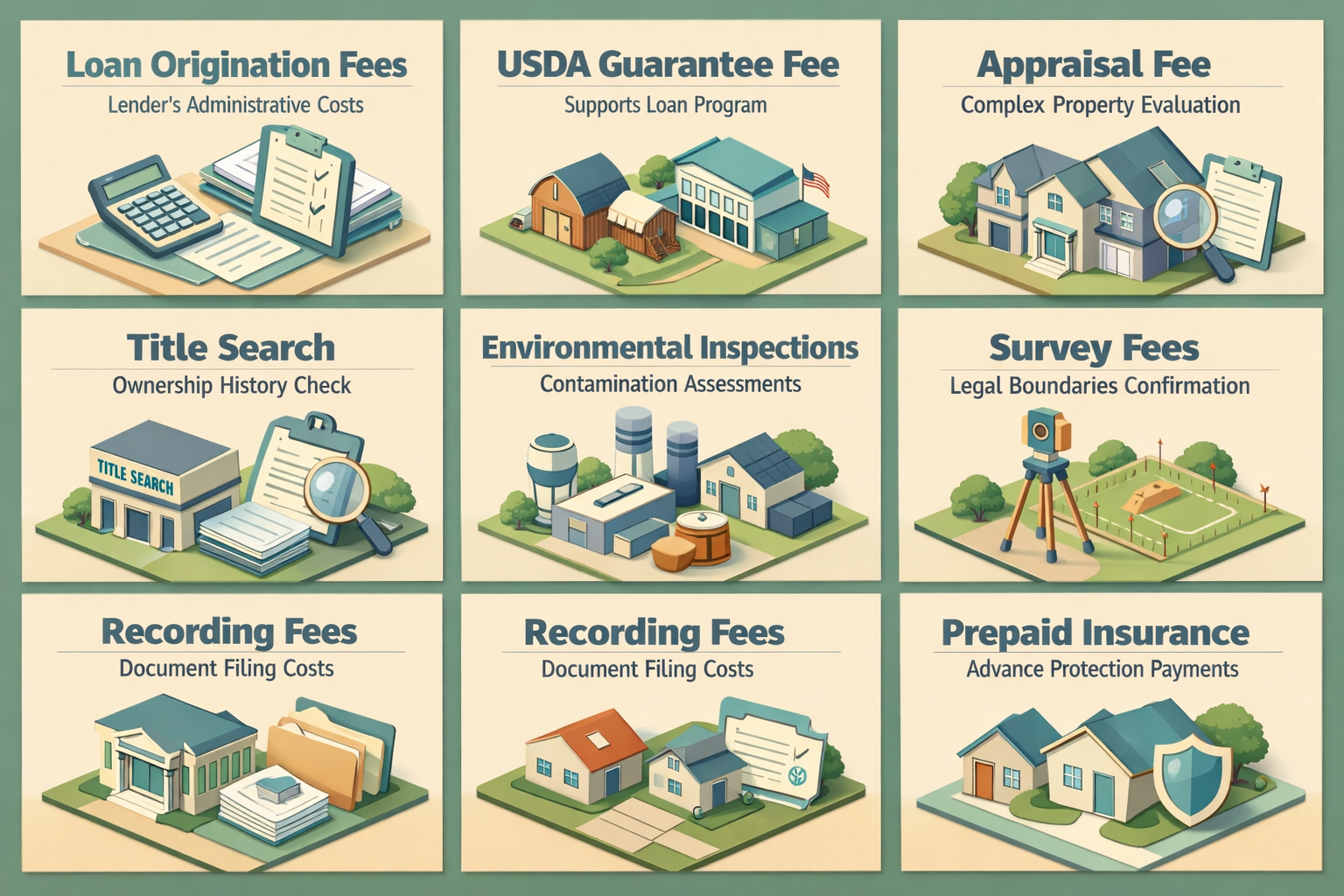
So, what are closing costs for a USDA loan on an existing farm in practical terms? While every transaction is different, here are the main fee categories you're likely to encounter.
Loan Origination and Lender Fees
If you're working with a private lender through a USDA guaranteed program, expect to pay an origination fee. This typically covers the lender's administrative costs for processing and underwriting your loan. Origination fees are often expressed as a percentage of the loan amount and can vary by lender. On farm loans, which may carry higher loan balances than residential mortgages, even a small percentage can represent a significant dollar amount.
USDA Guarantee Fee
One fee that's unique to USDA-backed loans is the guarantee fee. For USDA Rural Development guaranteed loans, there is an upfront guarantee fee — sometimes called a funding fee — that helps support the loan program. As of recent program guidelines, this upfront fee has been relatively modest compared to FHA's mortgage insurance premium, though borrowers should confirm the current rate with their lender or through official USDA resources since these figures may change. There may also be an annual fee built into your monthly payment.
Appraisal Fee
Appraising a farm is more complex than appraising a standard residential property. A licensed agricultural appraiser must evaluate not just the home structure but also the cropland, pasture, outbuildings, water rights, soil quality, and overall agricultural productivity. Because of this complexity, farm appraisals typically cost more than residential appraisals and can range considerably depending on the property's size, location, and diversity of use. Budget accordingly and ask your lender for an estimate early in the process.
Title Search and Title Insurance
A title search on existing farm property can be particularly involved. Farms often have long ownership histories, easements, mineral rights separations, or liens from agricultural lenders. The title search uncovers these issues, and title insurance protects both you and your lender if undiscovered claims arise after closing. Expect both a lender's title insurance policy (typically required) and the option to purchase an owner's title insurance policy for your own protection.
Environmental and Soil Inspections
Unlike standard home purchases, buying an existing farm may require specialized inspections. Environmental assessments may be required by the lender to check for contamination from pesticides, fuel storage, or prior industrial use. Soil tests may also be relevant to establishing the property's agricultural value. These inspections are not always required, but they're common enough with farm transactions that you should include them in your cost estimates.
Survey Fees
Existing farms may have boundary disputes, shared fencing lines, or unclear easements. A certified land survey confirms the exact legal boundaries of the property. Lenders often require an updated survey if one hasn't been completed recently. Survey costs can vary widely based on acreage and terrain complexity.
Recording Fees and Transfer Taxes
Once the transaction closes, the deed and mortgage documents must be recorded with the local county or municipality. Recording fees are generally modest but vary by jurisdiction. Some states also impose a transfer tax or deed stamp tax on real property sales, which can add meaningfully to your total closing costs depending on the purchase price and your state's rules.
Prepaid Items and Escrow Deposits You Should Anticipate
Beyond the transactional fees, you'll also need to fund certain prepaid items at closing. These aren't fees in the traditional sense — they're advance payments that protect you and your lender going forward.
- Homeowners or Farm Property Insurance: Most lenders require proof of hazard insurance and may ask for the first year's premium to be paid at closing. For farm properties, this may include specialized farm and ranch insurance that covers outbuildings, equipment, and livestock-related liability.
- Property Taxes: Depending on when in the tax year you close, you may need to prepay a portion of the annual property taxes into an escrow account.
- Flood Insurance: If any portion of the farm falls within a FEMA-designated flood zone, federal law may require flood insurance. Farm properties in low-lying or river-adjacent areas are more commonly affected by this requirement.
- Prepaid Interest: The interest that accrues from your closing date to the end of the first month is typically collected at closing. On a larger farm loan, this can be a noticeable sum.
These prepaid costs are separate from closing fees but are included in your Closing Disclosure and contribute to your total cash needed at settlement. Don't be caught off guard — ask your loan officer for an early estimate of prepaids alongside your formal Loan Estimate.
USDA Farm Loan Closing Costs on Existing Property — What Makes Farms Different
When it comes to USDA farm loan closing costs on existing property, it's worth highlighting why farm transactions tend to be more complex — and potentially more expensive — than a standard single-family home purchase.
First, agricultural properties often require multiple types of professionals at the closing table. You may need not just a real estate attorney or title agent, but also an agricultural attorney familiar with water rights, grazing easements, or conservation program agreements like CRP (Conservation Reserve Program). If the existing farm is enrolled in a federal agricultural program, understanding how that transfer of ownership affects program payments and obligations is critical — and may require specialized legal guidance.
Second, farm valuations are inherently more variable. Unlike residential comps that can be pulled from a neighborhood database, comparable farm sales may be sparse, especially in rural counties. This can extend the appraisal timeline and, in some cases, lead to disputes over value between buyer, seller, and lender.
Third, lien searches on agricultural property may reveal equipment liens, crop liens, or USDA FSA subordinate liens from prior loans. These must be resolved before a clean title can transfer. Each resolution step may involve its own attorney fees or payoff costs.
Finally, if the farm includes any structures beyond the primary residence — such as grain bins, livestock facilities, or irrigation infrastructure — those assets may affect how the property is classified and insured, which in turn affects closing-cost requirements.
Can Closing Costs Be Rolled Into a USDA Farm Loan?
One of the most common questions farm buyers ask is whether they can roll their closing costs into the loan rather than paying them out-of-pocket expenses aside. The answer depends on the program and the appraised value of the property.
For USDA Rural Development Guaranteed Loans, it may be possible to finance closing costs into the loan if the appraised value of the property exceeds the purchase price by enough to accommodate them. In other words, if the home and farm appraise higher than what you're paying, there may be room to wrap some costs into the loan balance. However, this isn't guaranteed and lenders will evaluate each situation individually.
For FSA Direct Loans, the FSA has specific rules about what can and cannot be included in the loan amount. Certain eligible costs — such as closing costs directly related to the purchase — may be financeable, but you should confirm current program guidelines with your local FSA office, as policies can be updated.
Another common strategy is seller-paid closing costs. In a buyer's market or when a seller is motivated, it may be possible to negotiate for the seller to cover a portion of your closing costs. USDA programs generally allow seller concessions up to a defined limit of the purchase price, though specific caps can vary. This is worth exploring during your purchase negotiation.
Lender credits are also an option — in exchange for accepting a slightly higher interest rate, your lender may offer a credit toward closing costs. This reduces your upfront cash need but increases your long-term interest expense, so weigh the tradeoff carefully.
How to Estimate and Prepare for Your Closing Day Costs
Preparation is everything when it comes to managing closing costs. Here's a practical framework for farm buyers using USDA financing.
Request Your Loan Estimate Early
Within three business days of submitting a complete loan application, your lender is required to provide a Loan Estimate. This document breaks down estimated closing costs by category. Review it carefully and ask your loan officer to explain any line items that aren't clear. For farm transactions, make sure the estimate accounts for agricultural-specific items like farm appraisals and soil inspections — not just standard residential fees.
Compare Lender Fees
Not all lenders charge the same origination fees, processing fees, or underwriting fees. If you're using a USDA guaranteed program through a private lender, it pays to shop around. Some fees are negotiable, and even modest savings on origination charges can be meaningful on a larger farm loan.
Build a Closing Cost Reserve
Given the complexity of farm transactions, it's wise to budget conservatively. While closing costs on standard residential mortgages often range roughly between 2% and 5% of the loan amount, farm transactions may push toward the higher end of that range — or beyond — due to appraisal complexity, title work, and inspection requirements. Having a financial cushion reduces stress and prevents last-minute scrambles.
Work With Professionals Who Know Agricultural Real Estate
A real estate agent with farm and agricultural experience, a title company familiar with rural properties, and an attorney who understands USDA lending guidelines can all help prevent unexpected costs from appearing late in the process. Their expertise often pays for itself by catching issues early.
●Conclusion
Understanding what are closing costs for a USDA loan on an existing farm is a crucial step in your path to agricultural landownership. From guarantee fees and agricultural appraisals to title searches with complex lien histories and environmental inspections, farm transactions carry a broader and sometimes more expensive set of closing requirements than standard home purchases. The good news is that with proper preparation, the right professionals at your side, and a clear understanding of your USDA program options, these costs are manageable. Whether you explore rolling costs into the loan, negotiating seller concessions, or simply building a well-funded reserve, there are real strategies available to ease the financial burden at closing. At LoanWise, we're here to help you navigate every step of the USDA farm financing process — from your first application to the moment you receive the keys to your land. Reach out today to connect with a lending specialist who understands agricultural real estate inside and out.