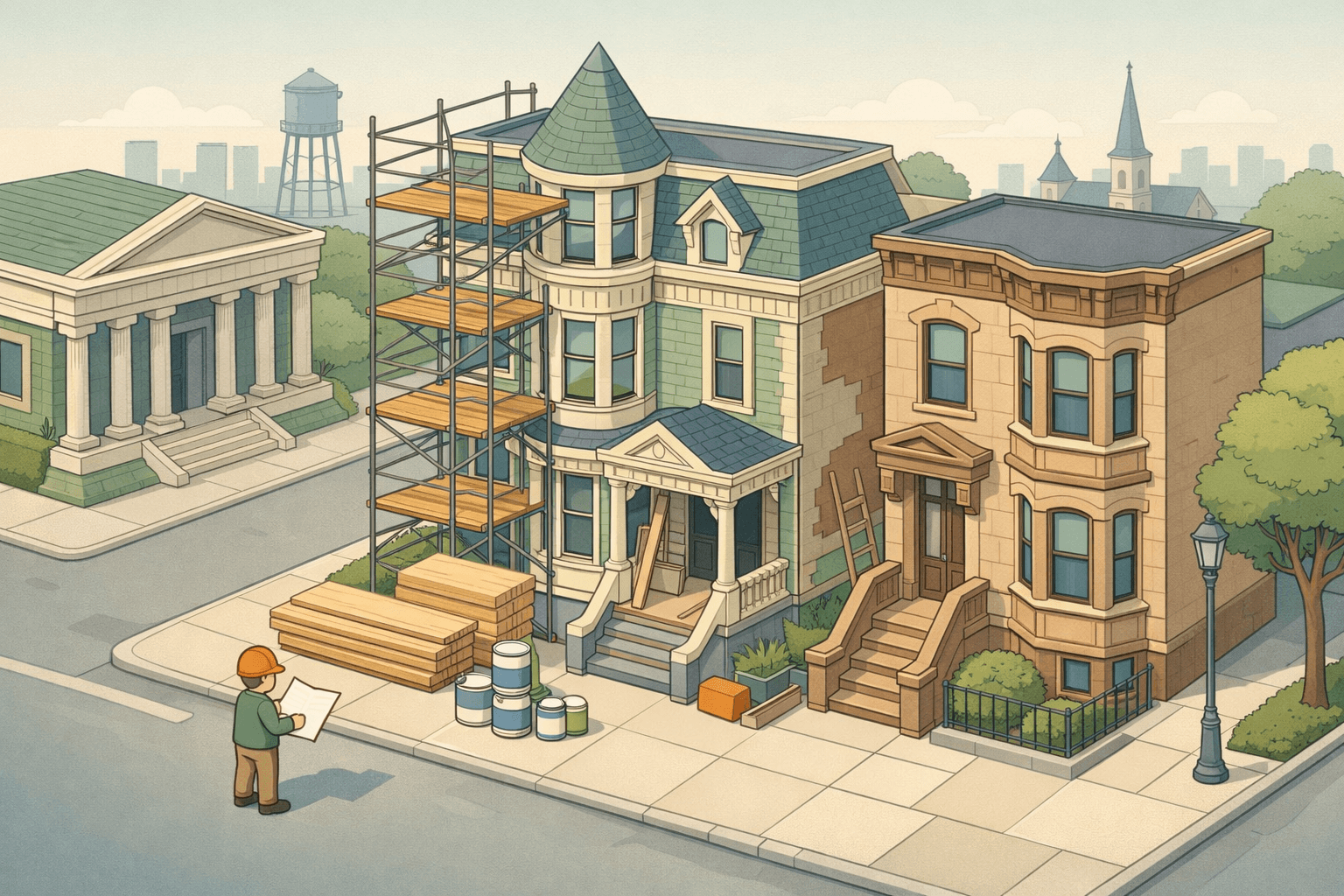
New Jersey's housing market presents a distinctive challenge for renovation borrowers. The state's older housing stock — much of it built before 1980 — means a large share of available properties require meaningful updates before they meet move-in standards or qualify for conventional financing. At the same time, high property values across northern and central counties mean that even modest fixer-uppers can carry significant acquisition costs, making the ability to finance repairs alongside a purchase critical to deal viability.
The FHA 203k loan addresses this directly. Unlike standard FHA purchase mortgages, the 203k program allows borrowers to wrap the cost of eligible repairs and renovations into a single loan — at closing — rather than layering separate construction financing on top of a purchase. There are two variants: the Limited 203k, which caps renovation costs at $75,000 and is suited to cosmetic or non-structural work, and the Standard 203k, which requires a minimum of $5,000 in rehab costs, mandates an HUD-approved consultant, and supports structural and major system repairs. Both require the property to serve as a primary residence, and down payment requirements range from 3.5% to 10% depending on the borrower's credit profile.
New Jersey borrowers also benefit from the state's FHA loan limits, which reflect the area's elevated home prices. Low-cost single-family FHA limits in the state reach $541,287, while high-cost area limits extend to $1,249,125 — a meaningful ceiling that expands the universe of eligible properties for 203k financing compared to lower-cost states.
This ranking evaluates lenders based on factors including their explicit commitment to the 203k product, evidence of active presence or licensing in New Jersey, the depth of borrower qualification guidance they provide, and whether their platform supports both purchase and refinance rehab scenarios. Marketplace and educational platforms are included where they provide meaningful utility for borrowers in the research and comparison phase, but ranked accordingly relative to direct originators.